The Northfield Raid & the Strange Fate of Two Dead Outlaws
On Friday, July 7, 1876, the James-Younger Gang robbed an express car on the Missouri Pacific Railroad in a deep rock cut four miles east of Otterville, Missouri.
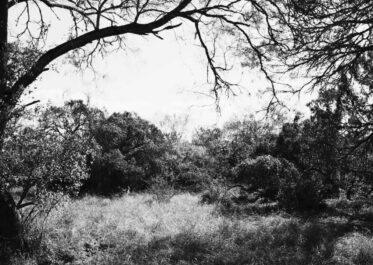
One newspaper called the stretch, known as Rocky Cut, “one of the most dreary spots along the road,” but it was an ideal place for the gang to hold up their target.
The gang included Jesse and Frank James, Cole and Bob Younger, Clelland “Clell” Miller, Charlie Pitts, William “Bill” Chadwell (alias Bill Stiles), Hobbs Kerry, and possibly others.
When the robbery was complete over an hour later, the outlaws rode away with an estimated $17,000 or more, mostly in cash. No one was killed during the holdup.
Less than a month later, Hobbs Kerry was arrested and quickly confessed to the Rocky Cut robbery and other crimes.
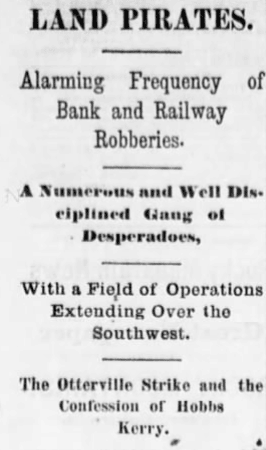
He identified his accomplices—including the James and Younger brothers—though Jesse attempted to distance himself from Kerry’s accusations.
“Kerry knows that the James and Youngers can’t be taken alive, and that is why he has put it on us,” Jesse wrote in a letter to the Kansas City Times in August.
Investigators deemed Kerry’s confession credible, and the robbery had the signature marks of a James-Younger holdup. Despite Jesse’s public pleading, authorities in Missouri were hot on the group’s trail.
To escape the heat—and with other motivations—the gang left Missouri for the bustling frontier city of Minneapolis, far from their usual haunts. They arrived in August and began scouting locations for their next heist.
They split into small groups and surveyed various towns in Minnesota, including Minneapolis, St. Paul, Red Wing, Madelia, and Mankato, where they considered holding up the First National Bank before thinking better of it.
Eventually, they rode through Northfield, a small but growing frontier college town about 40 miles south of Minneapolis. It was a friendly, well-educated community on the banks of the Cannon River, founded by New Englanders who’d moved west in the 1850s.
“An observant stranger, entering the city for the first time, could hardly fail to get the impression of intelligence, thrift and commercial enterprise,” wrote George Huntington in his 1896 book, Robber and Hero: The Story of the Raid on the First National Bank of Northfield, Minnesota, by the James-Younger Band of Robbers in 1876.
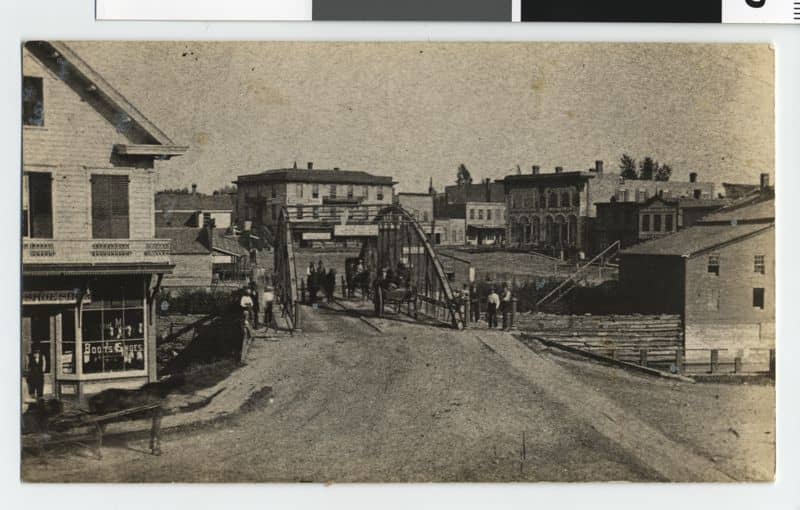
Northfield also had a First National Bank—a particularly appealing target to Jesse James. One of the bank’s investors was Adelbert Ames, a Union Civil War general who, in 1868, was appointed the provisional governor of Mississippi. Ames would also serve in the U.S. Senate after Mississippi’s readmission to the Union.
Aside from appearing like an easy target, the Northfield First National Bank would also be a revenge heist for the pro-Confederate gang.
“Jesse was the ultimate Southern partisan, and he relished the idea of striking a blow revenge, be it personal or political,” wrote Mark Lee Gardner in Shot All to Hell: Jesse James, the Northfield Raid, and the Wild West’s Greatest Escape. “He would hit the bank of Adelbert Ames and ride off with grain sacks stuffed with a notorious carpetbagger’s money.”
The crew in Minnesota included Jesse and Frank James, Cole, Bob and Jim Younger, Charlie Pitts, Clell Miller, and Bill Chadwell. Some, including the late Minnesota author John Koblas, speculate there was a ninth man—perhaps the real Bill Stiles—waiting just outside of town, but many accounts agree there were eight outlaws present.
On September 7, the James-Younger Gang split into three groups and headed for downtown Northfield, where they would attempt the country’s first robbery of a national bank.
The Northfield Raid
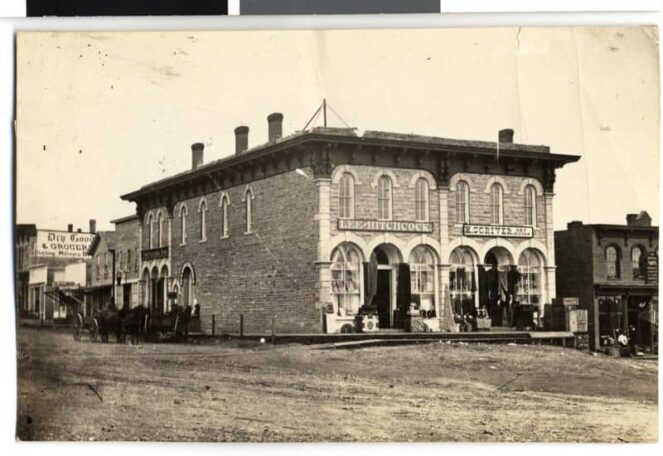
The First National Bank was located in the Scriver Block, a stout two-story brick building on the south side of Bridge Square on Division Street in downtown Northfield.
In theory, the outlaws’ plan was simple: one group would rob the bank, and two others would serve as guards to the north and south of the building.
Wrote George Huntington in Robber and Hero:
It was about 2 o’clock in the afternoon that the first trio, consisting of Pitts, Bob Younger and, it is believed, one of the James brothers, came over the bridge, and crossing the Square from northwest to southeast, dismounted in front of the bank, throwing their bridle reins over some hitching-posts beside the street. They then sauntered to the corner and lounged upon some dry-goods boxes in front of the store (Lee and Hitchcock’s) assuming an air of indifference, and whittling the boxes, like the most commonplace loafers.
Next, Cole Younger and Clell Miller rode their horses up Division Street from the south. When the first trio saw them, they went inside the bank, and Miller headed toward the entrance to stand guard.
Cole Younger stopped in the street to watch for trouble in either direction. In nearby Bridge Square, Jesse James, Jim Younger, and Bill Chadwell guarded the northern entrance to the area, where the outlaws had ridden into town.
Then, their plan began to unravel.
Several locals on Division Street became suspicious of the mysterious strangers in linen dusters, and when merchant J.S. Allen attempted to enter the bank, Clell Miller forced him back at gunpoint.
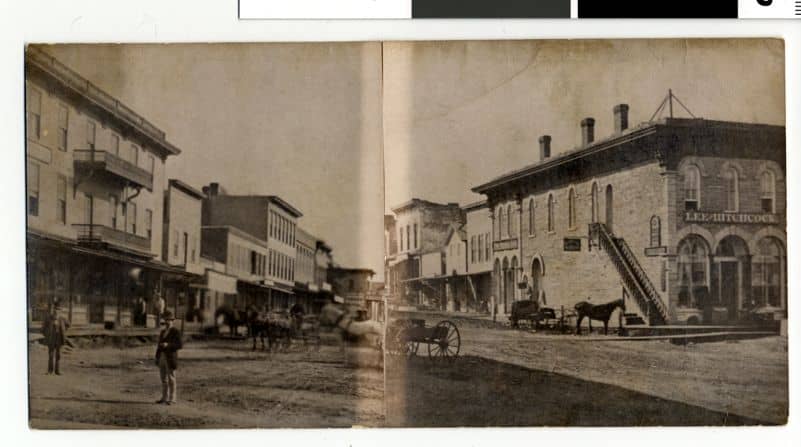
“Get your guns, boys! They’re robbing the bank!” Allen reportedly cried. Miller and Cole Younger began firing their guns up and down the street to clear curious onlookers.
Northfield residents on alert jumped inside buildings, and some responded to Allen’s call to arms. Henry Mason Wheeler, a medical student who sat on the east side of Division Street by his father’s hardware store, grabbed a .50-caliber Smith Carbine rifle—owned by Edward Dampier, a former U.S. cavalryman—in the Dampier Hotel.
Wheeler took up a position on the second floor, where he could fire at the outlaws from across the street. Anselm Manning, another nearby merchant, did the same on the other side of the street, Remington in hand.
From the hotel, Wheeler had a clear view of Miller and Jim Younger, who, with Jesse and Chadwell, had left Bridge Square to help clear the street with fired revolvers and yelled orders, wrote Gardner in Shot All to Hell:
He [Wheeler] aimed at Clell Miller, who was bent over in the saddle, doing something to his left stirrup. Because his shot at Jim Younger had gone high, Wheeler aimed low on Clell and squeezed the trigger. The gunshot cut through the noise on the street and Clell felt a blow like a hammer as the heavy load round punched through his shoulder, severing his subclavian artery. Clell Miller fell off his horse but managed to get up on his knees. He appeared to be yelling orders to the other robbers before his heart finally pumped the last of his blood, and he toppled over onto his face. Henry Wheeler, the medical student, had killed a man.
Within minutes Division Street became a “leaden hail-storm” as the outlaws attempted to clear the locals, who in turn fought back to protect their town and the bank’s money. From his position, Manning wounded Cole Younger, then shot and killed Chadwell.
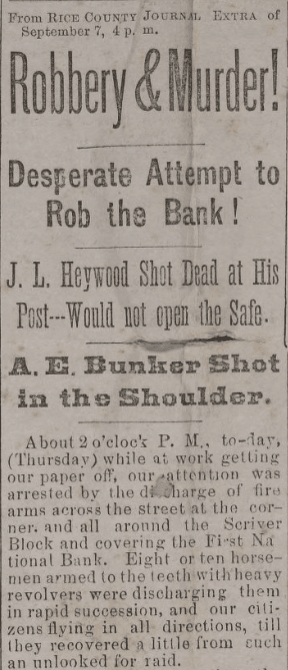
Inside the bank, the outlaws’ luck was just as lousy. Employees Joseph Lee Heywood, Alonzo Bunker, and Frank Wilcox claimed the bank’s safe was on a time lock and couldn’t be opened.
This was true, but also misleading.
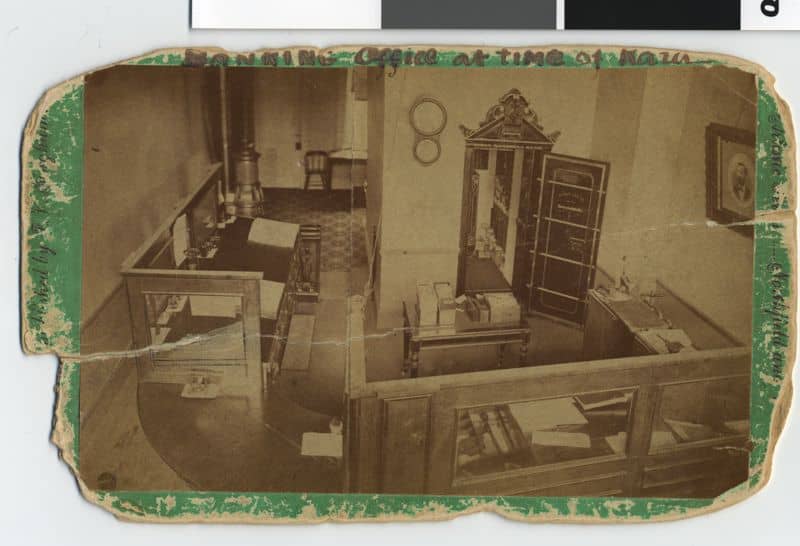
“The reason they could not unlock it was that it was unlocked already,” wrote Huntington. “The door was closed and the bolts were shot into place, but the combination dial was not turned.”
After futile back-and-forth conversations and with the commotion raging outside, the outlaws finally left, but not before shooting Heywood point blank in the head, and wounding Bunker as he tried to run out a backdoor.
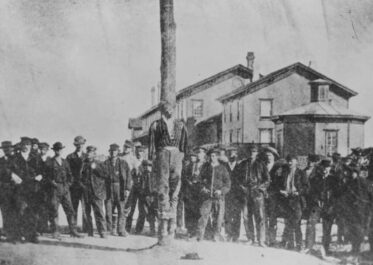
When the outlaws finally fled south of town, they left behind two dead men in Miller and Chadwell. Two Northfield men would also be killed: the courageous acting bank cashier Heywood, and Nicolaus Gustavson, a Swedish immigrant who, not understanding English well, found himself caught in the crossfire on Division Street.
Expecting a big haul from the national bank, the outlaws rode away with an estimated $26.70.
The End of the James-Younger Gang
The botched “Northfield Raid,” as it came to be known, was the beginning of the end for the James-Younger Gang. For weeks, authorities from around the West would chase the outlaws on a massive manhunt that spanned hundreds of miles.
The James boys weren’t caught, but the Youngers and Charlie Pitts were found near Madelia, Minnesota. Pitts died in the subsequent firefight, and the Younger brothers were arrested and eventually pleaded guilty to murder and robbery to avoid being hanged.
They received life sentences to be served at Minnesota Territorial Prison; Bob died there on September 16, 1889, from tuberculosis, and Jim and Cole were paroled out in 1901.
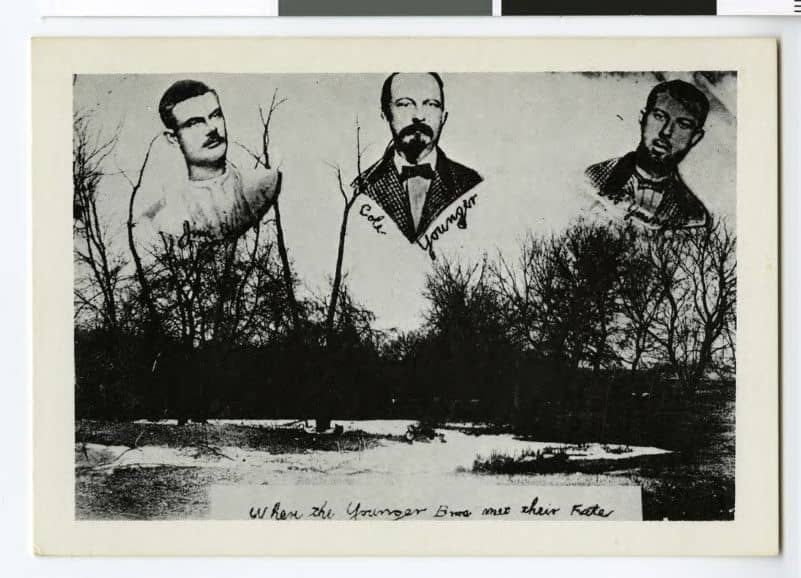
Jim committed suicide in 1902 when he couldn’t marry his fiancée due to the terms of his parole. When Cole died on March 21, 1916, the last remaining member of the James-Younger Gang at Northfield was gone.
Back in Northfield, the town recognized the heroic deeds of Henry Wheeler, Anselm Manning and others who fought against the outlaws.
Wheeler, who grew up in Northfield, was a medical student at the University of Michigan in Ann Arbor visiting his family for the summer. His friends and fellow Wolverines Clarence E. Persons and Charles Dampier, whose father owned the Dampier Hotel, were also in town.
With two dead outlaws in the streets of Northfield, Wheeler, Persons and Dampier soon considered the academic benefits of the failed robbery.
“There were more corpses lying around Northfield right now than the university dissection laboratory was likely to see in a semester,” wrote William Bender Jr. in a 1960 issue of True Western Adventures.
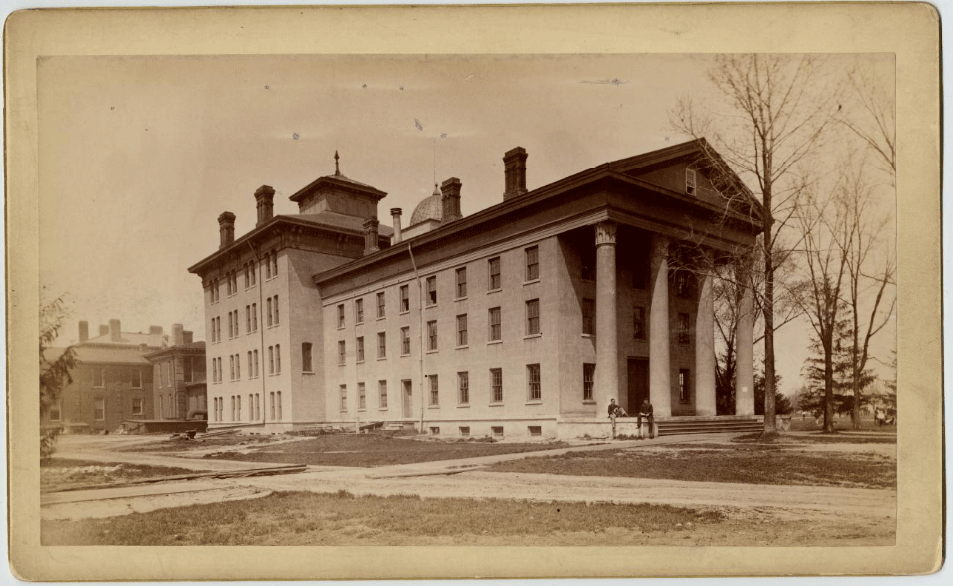
That may or may not have been true. The Ann Arbor school was the country’s first university to operate its own hospital, and its medical department had a reputation for its ability to gather dead bodies for dissection and study.
William Holtz wrote in Michigan Quarterly Review:
Bodies, supplied by a network of agents, arrived frequently in barrels marked ‘Pickles’; and although the regard for public relations kept Ann Arbor cemeteries fairly safe and local people rather unconcerned, there were well-founded suspicions about the Department of Anatomy. One Demonstrator, asked where the school got its subjects, replied candidly, ‘We raise ’em’; and there was a campus joke to the effect that ‘a medic is never happier than when he finds a fellow man in a pickle.’
Still, the prospect of two dissectible bodies was too good to pass up. The students asked Mayor Solomon Stewart if they could have the bodies, seeing as Wheeler was responsible for one of their deaths.
After initially agreeing to the request, the mayor said the bandits would instead be buried in the town cemetery, but implied that the job would be done in shallow graves.
Author George Huntington, whose book Robber and Hero is considered one of the most accurate and comprehensive accounts of the Northfield Raid, only hints at what happened to the bodies of the outlaws:
In an obscure corner of the same cemetery, at night, with neither mourner nor funeral rites, two boxes were buried, supposed to contain the bodies of the dead robbers. No one took the trouble to ascertain the genuineness of the proceeding, or to guard the grave from desecration. That the bodies of criminals belong to anatomical science, is a prevalent opinion. That these criminals were not too good for such a purpose, was readily conceded.
“For obvious reasons, Huntington determined that body snatching was a bit more than the reading public might have tolerated, especially from one of Northfield’s illustrious local heroes,” wrote John McGuigan in his 1986 introduction to Robber and Hero.
The night of the robbery, Wheeler joined local posses hunting the remaining six outlaws, while Persons and Dampier allegedly dug up the bodies of Miller and Chadwell. The bodies were loaded into kegs on a wagon, and marked for delivery to the medical building at the University of Michigan in Ann Arbor. Accounts say the kegs were labeled “fresh paint” or “fresh pickles,” and eventually delivered to the university, more than 650 miles east of Northfield.
The bodies arrived at the school by late September, and were stored in a vat with “a solution of arsenic and brine to preserve medical specimens.” Presumably, the bodies were used by medical students at the beginning of the 1876 fall semester.
In October 1876, Clell Miller’s family requested that his remains be returned to them. The Millers hired attorney Samuel Hardwicke, who went with Clell’s brother Ed to retrieve the body from the university.
The men were given a body, but because of the time that had passed since the outlaws were killed on September 7, it was likely difficult to determine which was Miller.
In “Clell Miller Exhumation Postponed,” authors James A. Baily and Margaret B. Bailey wrote:
By the time the body arrived in Clay County sometime before November 6, 1876, it would have been approximately sixty days since the gang members were killed in Northfield. A brine solution would inhibit some bacterial growth on the surface of the skin; however, autolysis would continue to occur within the body. In all likelihood, there would be bloating, purplish or blackish skin discoloration, skin slippage and other postmortem changes after sixty days of decomposition. Given those conditions, visual identification would almost certainly have been unlikely at an interval of approximately sixty days after death. Certainly family and friends wanted to believe it was Miller; however, the returned body could easily have been Chadwell or the body of an unknown person retrieved from the vat of anatomy specimens.
Even before they were buried in a shallow grave in Northfield, the identities of Clell Miller and Bill Chadwell weren’t exactly clear.
The men looked similar, and Chadwell also went under the alias Bill Stiles—another outlaw who was part of the James-Younger Gang—but who wasn’t present in Northfield, most accounts agree. Newspaper reports also speculated that one of the men was Charlie Pitts.
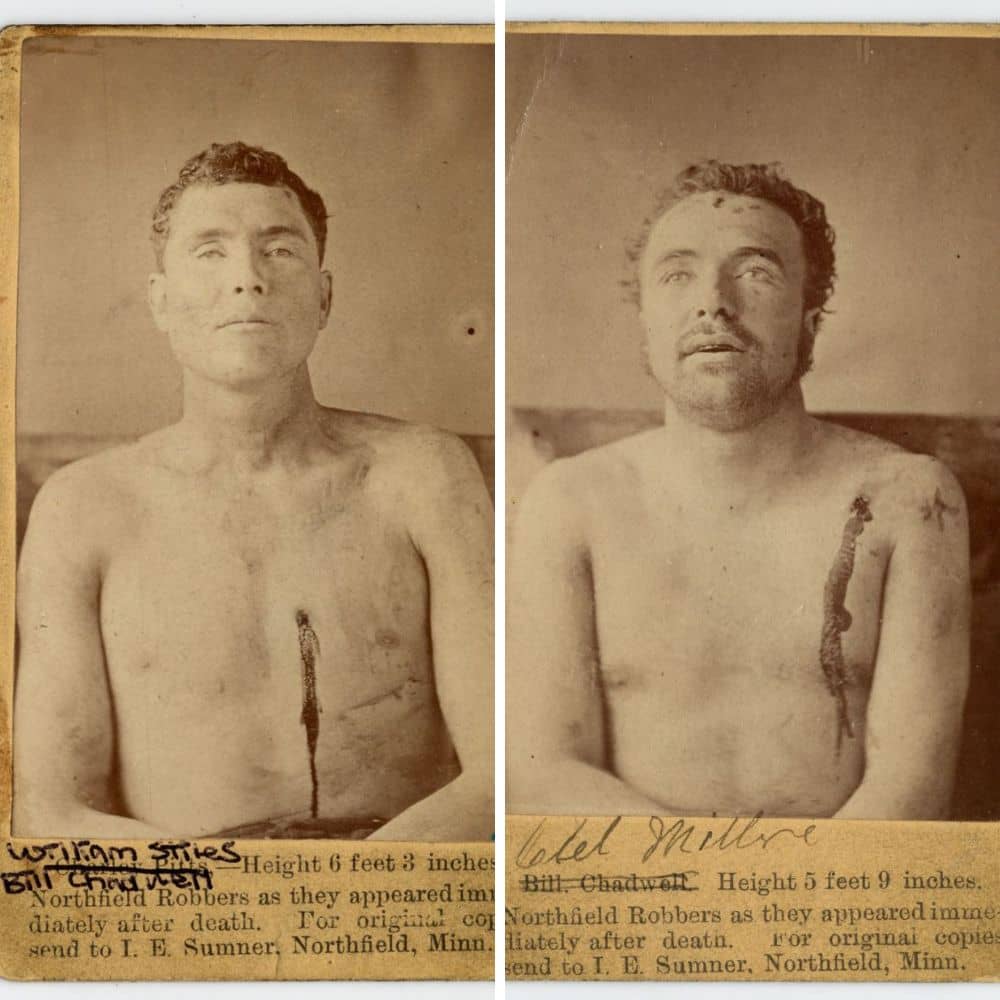
Eventually it was settled that the men were Miller and Chadwell, though more confusion would arise later on with Chadwell’s use of the “Bill Stiles” alias. In a 1969 Frontier Times article, a man who claimed to be the real Bill Stiles said he was also at the Northfield raid, but escaped with Jesse, Frank and the Youngers.
In November 1876, the body delivered from the university was buried in the Miller family plot at the Muddy Fork Cemetery in Kearney, Missouri. No family came for the other body, supposedly Chadwell’s, and it stayed at the school, where it was used for various dissections and studies through 1877.
When Henry Wheeler graduated that year, the only part left of the cadaver was its skeleton. Clarence Persons, the medical student who was with Wheeler the day he killed Miller, suggested the budding doctor keep it as a strange memento.
“Wheeler seems to have accepted Persons’s judgment, but whether he receives the relic as an honorable trophy or as a monstrous, rattling albatross, bound to him in dark kinship, we cannot tell,” wrote William Holtz in 1967.
Wheeler’s Skeleton
The skeleton stayed in Wheeler’s possession throughout his impressive medical career. He became a distinguished surgeon, once served as President of the North Dakota State Medical Association, and from 1918 to 1920, served as mayor of Grand Forks, North Dakota, where he practiced medicine for years.
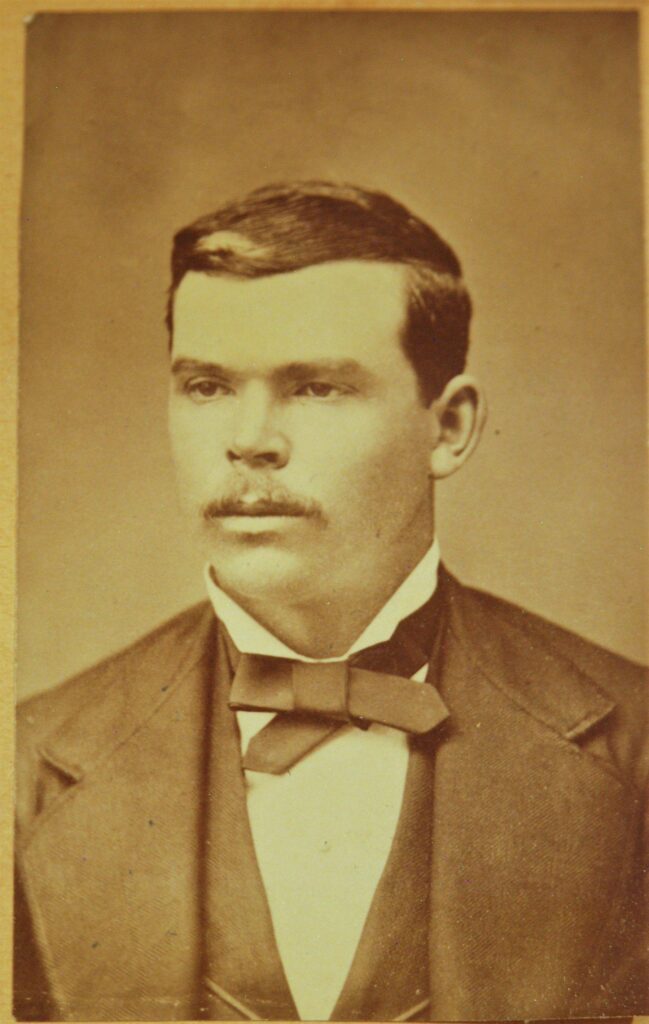
It was in Grand Forks that Dr. Wheeler featured the skeleton he claimed belonged to Clell Miller, the notorious Northfield outlaw who, as a teenager, had ridden with “Bloody Bill” Anderson as a Confederate raider in the Civil War.
Before Wheeler’s retirement in 1923, he donated the skeleton to Grand Forks’ Independent Order of Odd Fellows, a group to which Wheeler belonged. The Order eventually sold the skeleton to a private collector in the 1980s, where it stayed for decades.
In 2010, with lingering questions about the real identity of the skeleton—and who was buried in the Muddy Fork Cemetery—a forensic study found that the size and shape of the skull Wheeler kept were similar enough to pictures of Miller’s head “that the skeleton could not be eliminated as being Miller.”
The photographic study didn’t completely prove that the skeleton was Miller, but it showed “remarkable” similarities. In 2012, Ruth Coder Fitzgerald, a distant cousin of Miller, requested that the body buried in their family plot at Muddy Fork be exhumed so DNA could be examined.
The medical examiner of Clay County initially responded positively to the request, but ground-penetrating radar found that underneath the grave marker of Clell Miller were four different bodies—and it wasn’t clear which was his.
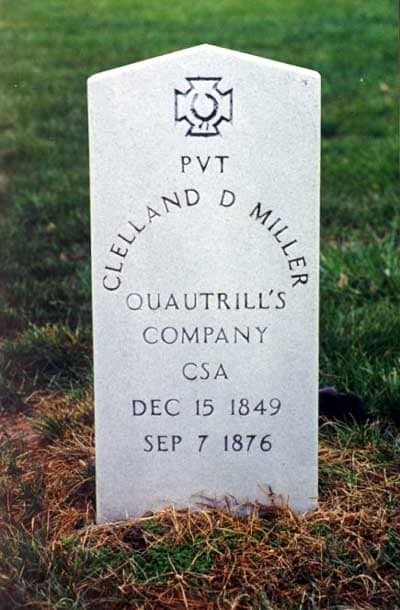
With those complications, and rising costs of the project, the request to exhume Miller’s body was denied. Today, it’s unknown who is buried under his grave marker, and whose skeleton Dr. Wheeler had displayed for so many years.
The Northfield Raid may be remembered as the end of the line for the James-Younger Gang, but for the families of Clell Miller and Bill Chadwell, questions about what happened in the last months of 1876 remain unanswered.
The Northfield Raid’s Legacy
Today, the First National Bank is part of the Northfield Historical Society, which restored the interior of the bank to how it appeared during the robbery attempt in September 1876.
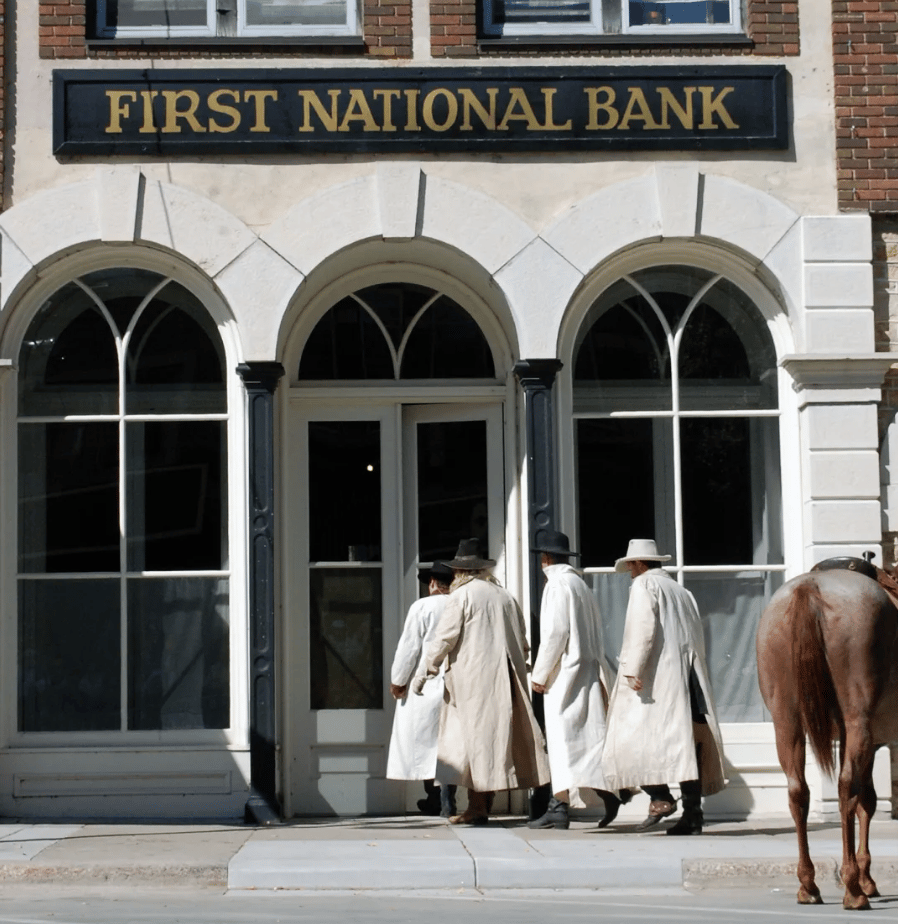
The town of Northfield celebrates its annual “Defeat of Jesse James Days” every September, complete with reenactments of the raid throughout the weekend.
Jesse James may have been something of a folk hero in Missouri, but in Northfield, locals like Henry Wheeler, Anselm Manning and Joseph Lee Heywood are considered the real heroes of the era.
The annual festival is a way to commemorate and remember their town’s historic bravery.
“To the people of Northfield, however, the ‘meaning’ of Jesse James also involves a justifiable pride in uncommon local accomplishment,” wrote McGuigan in Robber and Hero. “Nowhere is this more evident than at the local elementary school, where hundreds of children are gathered before each year’s festival to hear of their town’s heroism, as related by the costumed men who reenact the raid of Northfield’s streets.”
Sources & Further Reading
- Gardner, Mark Lee. Shot All to Hell: Jesse James, the Northfield Raid, and the Wild West’s Greatest Escape. New York: William Morrow, 2013.
- Holtz, William. “Bankrobbers, Burkers, and Bodysnatchers.” Michigan Quarterly Review 6, no. 2 (April 1967): 90-98. https://quod.lib.umich.edu/m/mqrarchive/act2080.0006.002/00000023.
- Huntington, George. Robber and Hero: The Story of the Raid on the First National Bank of Northfield, Minnesota, by the James-Younger Band of Robbers in 1876. Ross & Haines, Inc., 1962.
- Northfield News. The Northfield Raid. Phocion Publishing, 2019.
- “Wild West History Exhumation Postponed.” PDF file. Minnesota State University Mankato, Faculty Pages, James Bailey. May 2023. https://faculty.mnsu.edu/jamesbailey/wp-content/uploads/sites/60/2023/05/Wild-West-History-Exhumation-Postponed.pdf.
D.T. Christensen is the founding editor of OldWest.org, a history website committed to sharing and preserving stories of the American West. He was born and raised in Phoenix, Arizona, studied journalism at Northern Arizona University, and spent decades exploring the landscapes and history of the American West before moving to Massachusetts.