Skeleton Cave Massacre: The Tragic Battle of Salt River Canyon
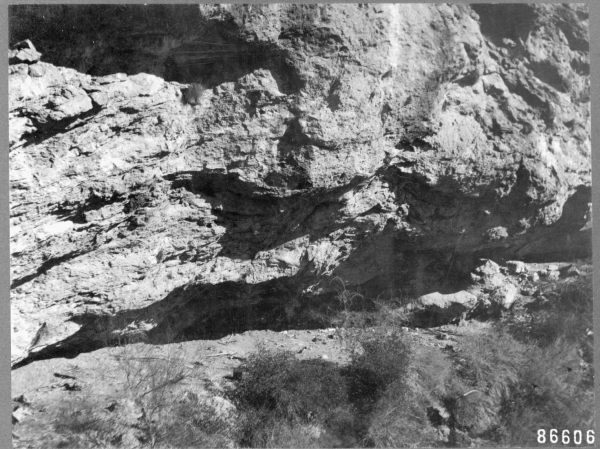
In early 1906, a cattleman named Jeff Adams, his two sons, and nearby rancher Ivy Crabtree discovered a large rock shelter in the canyon walls above the Salt River in central Arizona.
When they looked inside the cave—which was more of a deep rock overhang—they found a gruesome sight. The cave was filled with bleached skeletons scattered haphazardly across the sandy floor.
The four visitors were likely the first to see the cave and its contents in more than 30 years. In December 1872, the cave was the site of a massacre of Native Americans—thought at the time to be Apache—by soldiers of the Fifth Cavalry under the direction of Lieutenant Colonel George Crook during what was termed the Apache Wars.
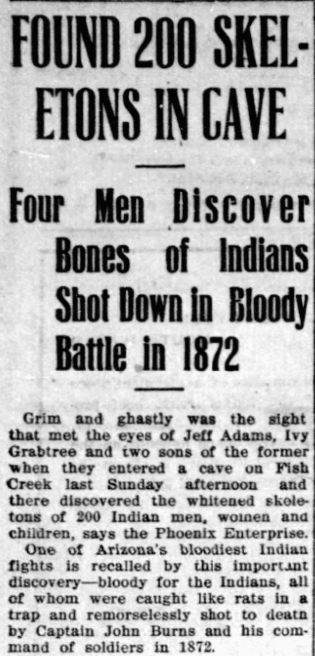
The attack was part of Crook’s winter campaign to clear the Arizona Territory’s Tonto Basin of Apache—and other groups, like the Yavapai—who were not yet living on reservations. They were considered hostile.
Adams’s early report estimated that some 200 skeletons were strewn about the shelter, which was located more than 1,000 feet up the north wall of the Salt River canyon, opposite Fish Creek to the south.
“Adams, in speaking of his discovery yesterday, stated that only those who see it for themselves can realize the awfulness of the thing,” reported the Bisbee Daily Review on February 7.
One man who knew the awfulness of it was Al Sieber, the legendary Army scout who served with Crook in the 1870s and 1880s. In 1906, Sieber was in his early sixties and working at the newly constructed Roosevelt Dam site when the cave was rediscovered, noted the Bisbee Daily Review:
Several in Phoenix have today recalled stories told them by Sieber regarding the trapping of the Indians on Fish Creek, after they had been on an unusually severe raid, and their slaughter without mercy. His story of the provocation given by the Indians justifies the drastic action taken by the soldiers.
Interest in the event grew after Adams’s discovery, and in the following years he guided others to the cave so that “more may be learned about the ghastly sepulchre,” one newspaper noted.
In the winter of 1908, photographer Walter J. Lubken, working for the U.S. Reclamation Service, traveled through the region and photographed his journey to the cave.
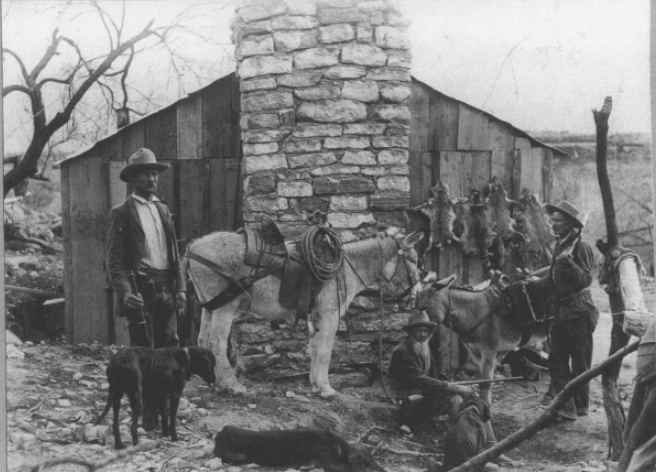
With Lubken’s photos, the public was introduced to the horrors of what would come to be known as the Skeleton Cave Massacre. (Lubken’s photos of the cave’s interior, where bones can be seen, are held at the Sharlot Hall Museum, which requests photos of Native American remains not be reproduced.)
After more than 35 years of silence, the story of what had happened at the cave was finally coming to light.
The Apache and Yavapai Wars
In 1872, Lieutenant Colonel George Crook launched a winter campaign to capture or kill any “non-reservation” Apache and Yavapai bands roaming throughout Arizona’s Tonto Basin.
The basin is a large, remote desert and forest highlands region bordered mostly by rugged mountains. To the north is the Mogollon Rim, to the south are the Superstition Mountains, and the Mazatzal Mountains—where the Four Peaks loom—lie to the west.
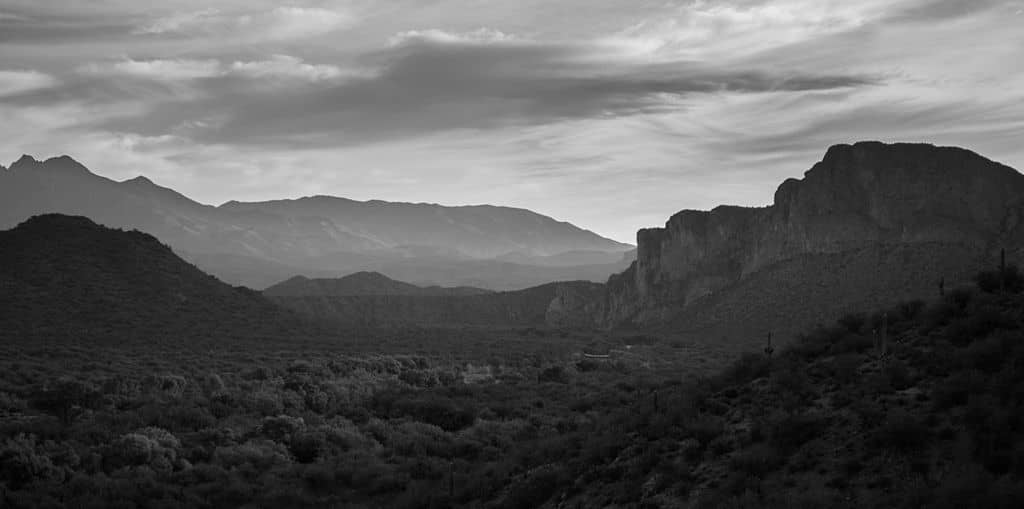
In the 1870s, the Tonto Basin was ripe with wildlife, fresh water, and healthy vegetation. It was also one of the last strongholds of the Tonto Apache (one of several Western Apache people) and the Yavapai, who were often mislabeled as Apache.
Throughout the 1860s and early 1870s, violence erupted continuously between the wave of incoming emigrants and regional Indigenous groups that had called the area home for hundreds of years.
In April 1871, a group of white, Hispanic, and Tohono Oʼodham (Papago) attacked a group of Aravaipa Apache near Camp Grant, killing more than 120, including women, children, and elderly.
The Aravaipa, led by chief Eskiminzin, had surrendered to First Lieutenant Royal Whitman at Camp Grant several months earlier, and were living near the fort as they awaited a more permanent reservation solution. By April, 500 Apache lived near Camp Grant.
Two months after the Camp Grant Massacre, Crook, who had seen success in Native American wars in the Pacific Northwest, was sent to Arizona to solve the “Apache problem” for good. His plan to start a winter campaign in 1871 was delayed by one last attempt to enact a peace policy in the region, but when that failed to quell violence, the commander received a green light at the end of 1872.
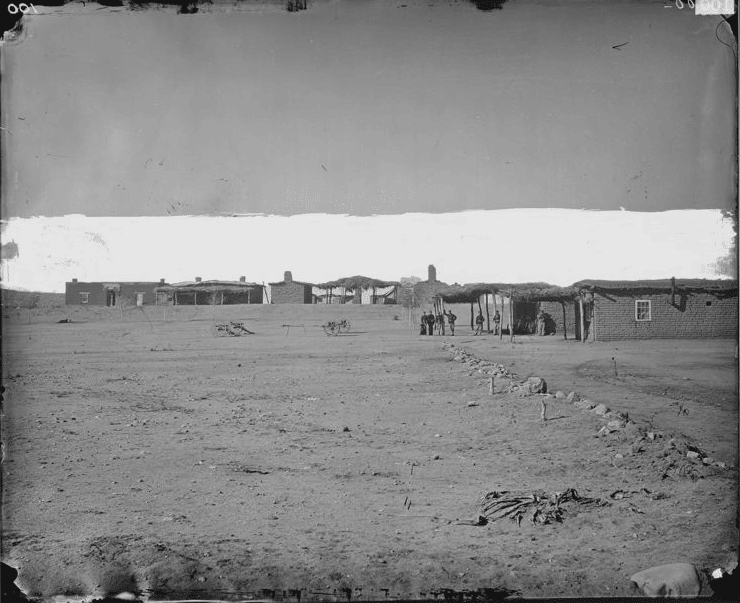
Crook’s strategy to clear the Tonto Basin was threefold. First, by starting in the winter, soldiers of the Fifth Cavalry could pursue Apache and Yavapai in a season when they had fewer resources, and stuck together in larger “winter” groups. They wouldn’t be able to travel as quickly or easily while so many of them were grouped together. Smoke from their fires would also be visible from far away.
Second, he would use Apache scouts who knew the lay of the land far better than white soldiers. The rugged, nearly alien terrain of the Tonto Basin was largely unfamiliar to most of the cavalry, but Apache or Yavapai scouts could direct the soldiers to known desert and mountain camps, or rancherias.
Finally, Crook positioned cavalry columns around the basin in a way that would surround and hem in the region to make it difficult for bands to survive on the run. Well-supplied pack trains would follow behind scouts and soldiers who could move quickly through the high desert landscape.
The Sweep of the Tonto Basin
Second Lieutenant John G. Bourke, Crook’s aide-de-camp for more than a decade, described the sweeping strategy in On the Border with Crook:
Briefly, they directed that the Indians should be induced to surrender in all cases where possible; where they preferred to fight, they were to get all the fighting they wanted, and in one good dose instead of a number of petty engagements, but in either case were to be hunted down until the last one in hostility had been killed or captured. Every effort should be made to avoid the killing of women and children. Prisoners of either sex should be guarded from ill-treatment of any kind. When prisoners could be induced to enlist as scouts, they should be enlisted, because the wilder the Apache was, the more he was likely to know of the wiles and stratagems of those still out in the mountains, their hiding-places and intentions. No excuse was to be accepted for leaving a trail; if horses played out, the enemy must be followed on foot, and no sacrifice should be left untried to make the campaign short, sharp, and decisive.
Through November and December 1872, Crook’s cavalry units pursued Apache and Yavapai groups in the region, occasionally engaging in minor skirmishes. By December 13, wrote Surviving Conquest author Timothy Braatz, more than 115 Yavapai and Apache had been killed in the campaign.
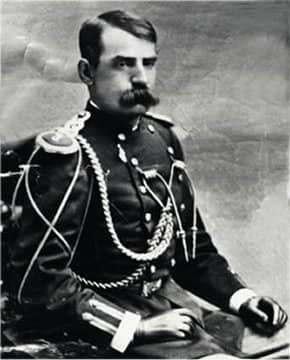
In late December, a Tonto Apache scout named Nantaje revealed that he had grown up in the region and knew of several rancherias in the Rio Salado (Salt River) and Four Peaks area.
One hideout was thought to be the location of Delshay, a well-known—and wanted—Yavapai leader. According to army reports, Delshay and his warriors were conducting raids in the area before escaping into their canyon hideaway.
On the night of December 27, Major William H. Brown’s company approached the Salt River from the north with 220 men—120 cavalry soldiers, including Bourke, and 100 Pima (Akimel O’odham) scouts.
“All are confident of finding Delt-chay in the stronghold, and, if so, we will make the biggest killing of the campaign,” Bourke wrote in his diaries.
His words would prove to be prophetic.
The Skeleton Cave Massacre
In the early morning hours of December 28, scouts spotted the rumored rancheria in the cliffs high above the Salt River. When the scouts fired shots at a small group they could see outlined in the dark, nearly all of the camp’s group ran to seek refuge in the cave.
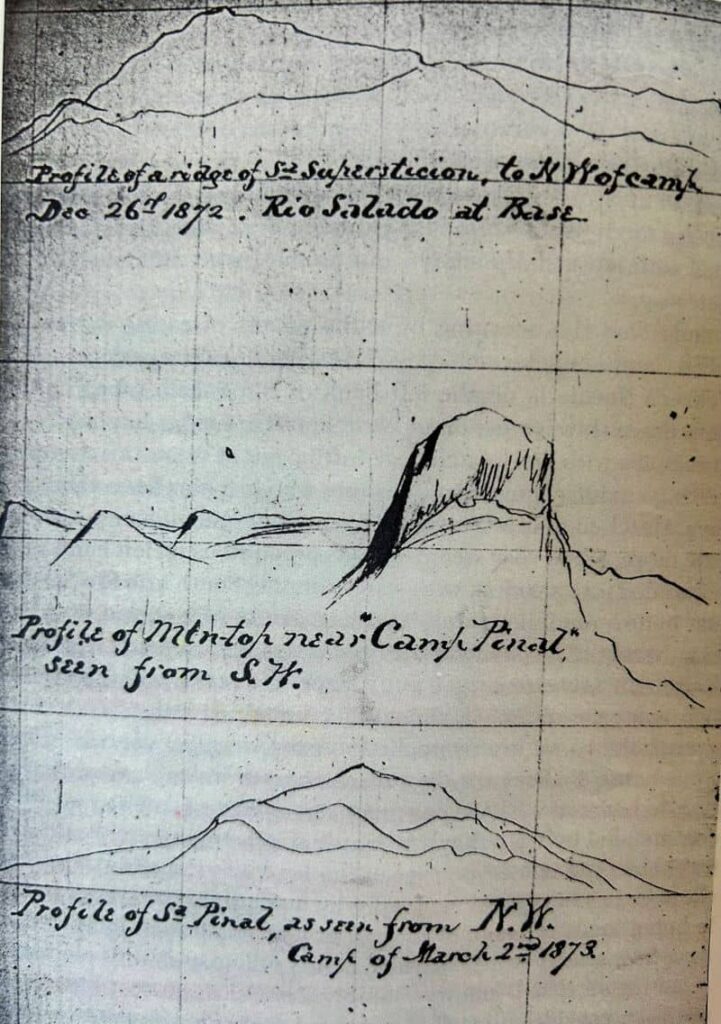
Bourke described the shelter in his diaries:
In a small, elliptical nook, upon the crest of the bluffs which here enclosed the Rio Salado was a small cave or depression in the rocks, which overhung the nook by at least 500’—the bluff, first mentioned, being 1000′ or 1200′ above the Rio Salado. In front of the cave, a natural rampart of sandstone 10′ high affords ample protection to the Indians, altho [sic] the great number of boulders scattered in every direction screened our men in turn from the fire of the besieged.
Major Brown’s company scrambled around and below the mouth of the cave, where they found defensive positions among the boulders and desert scrub.
According to Bourke, Brown offered the group several chances to surrender, but with each attempt, the group in the cave responded with jeers of defiance, making clear “that they intended to fight till they died.”
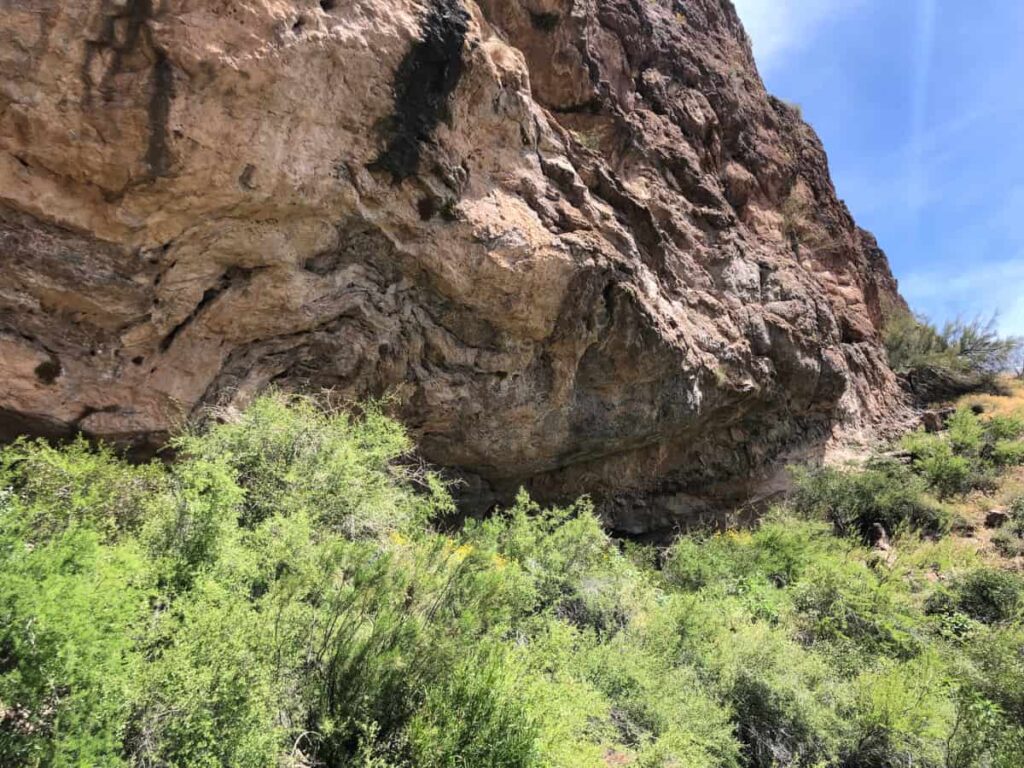
The soldiers didn’t have a direct line of fire into the overhang, however, so they attempted to shoot at the roof of the cave, hoping their bullets would ricochet into their intended targets.
Bourke described the merciless strategy:
A volley was now directed upon the mouth of the cave, & for (3) minutes every man in the command opened and closed the breech block of his carbine as rapidly as his hands could move. Never have I seen such a hellish spot as was the narrow little space in which the hostile Indians were now crowded.
The group fired back behind their rock ramparts, but to little avail. A second stream of bullets at the mouth of the cave, “increased twenty-fold beyond the last time,” were met with “increasing groans of the women,” who were either hit by the bullets or mourning their lost family members.
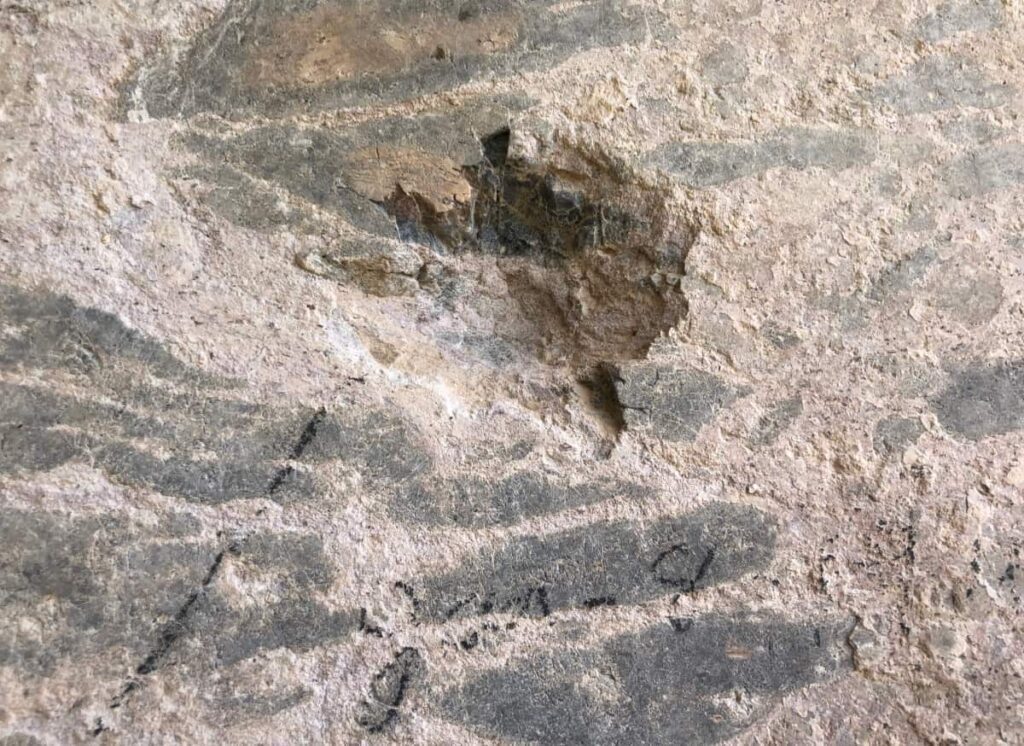
While Brown’s company shot from below the cave, Captain James Burns and his company arrived at the rim of the canyon and poured down their own volley of shots.
They also pushed off large boulders that filled the air with what Bourke described as:
…fragments of stone, breaking into thousands of pieces, with thousands behind, crashing down with the momentum gained in a descent of hundreds of feet. No human voice could be heard in such a cyclone of wrath; the volume of dust was so dense that no eye could pearce it…
In the melee, the soldiers could hear the people’s “death song,” what Bourke described as “half wail and half exultation—the frenzy of despair and the wild cry for revenge.”
Finally, there was silence.
The Aftermath
When the soldiers checked the cave, most of the group—men, women and children—were dead. Many were piled under other dead bodies, while some were crushed by the boulders pushed from above.
Bourke’s diary entry for December 27 described the event in some detail, but it wasn’t until 1891, nearly 20 years later, that he expanded on the horrors in On the Border with Crook:
I hope that my readers will be satisfied with the meagrest description of the awful sight that met our eyes: there were men and women dead or writhing in the agonies of death, and with them several babies, killed by our glancing bullets, or by the storm of rocks and stones that had descended from above. While one portion of the command worked at extricating the bodies from beneath the pile of débris, another stood guard with cocked revolvers or carbines, ready to blow out the brains of the first wounded savage who might in his desperation attempt to kill one of our people. But this precaution was entirely useless. All idea of resistance had been completely knocked out of the heads of the survivors, of whom, to our astonishment, there were over thirty.
Eighteen severely wounded captives were reportedly pulled from the cave—some accounts claim Pima scouts went in and killed some of the initial survivors—and it was unknown how many of the winter camp died. The cavalry lost no soldiers, though one Pima (Akimel O’odham) scout was shot and killed early in the shootout.
Soldiers rifled through the group’s supplies, taking what they wanted and burning the rest. The captives were taken to nearby Fort McDowell, and the soldiers left the area quickly, fearful of another rancheria‘s group ambushing them on the way out.
“No attempt was made to bury the dead,” Bourke wrote, “who, with the exception of our own Pima, were left where they fell.”
The Misidentified Yavapai
For Crook and the U.S. Army, the assault on the cave was considered a success. By April 1873, most of the Tonto Basin’s “hostile” population had surrendered. Delshay, who wasn’t in the cave the morning of December 28, surrendered in late April when he claimed to be down to just 20 warriors.
But for the families in the Salt River cave that night, the attack changed the trajectory of their culture.
To start, the group in the cave was typically labeled “Apache,” a catch-all term used by Americans who at the time believed that “the mountain dwellers constituted a single, monolithic ‘Apache’ tribe,” wrote author Timothy Braatz in Surviving Conquest: A History of the Yavapai Peoples.
The people in the cave, however, were Kwevkepaya Yavapai, a people unrelated to—but who often lived and intermarried with—Western Apache. Kwevkepaya and Western Apache (Tonto Apache and San Carlos Apache) shared land and resources, but they were culturally distinct.
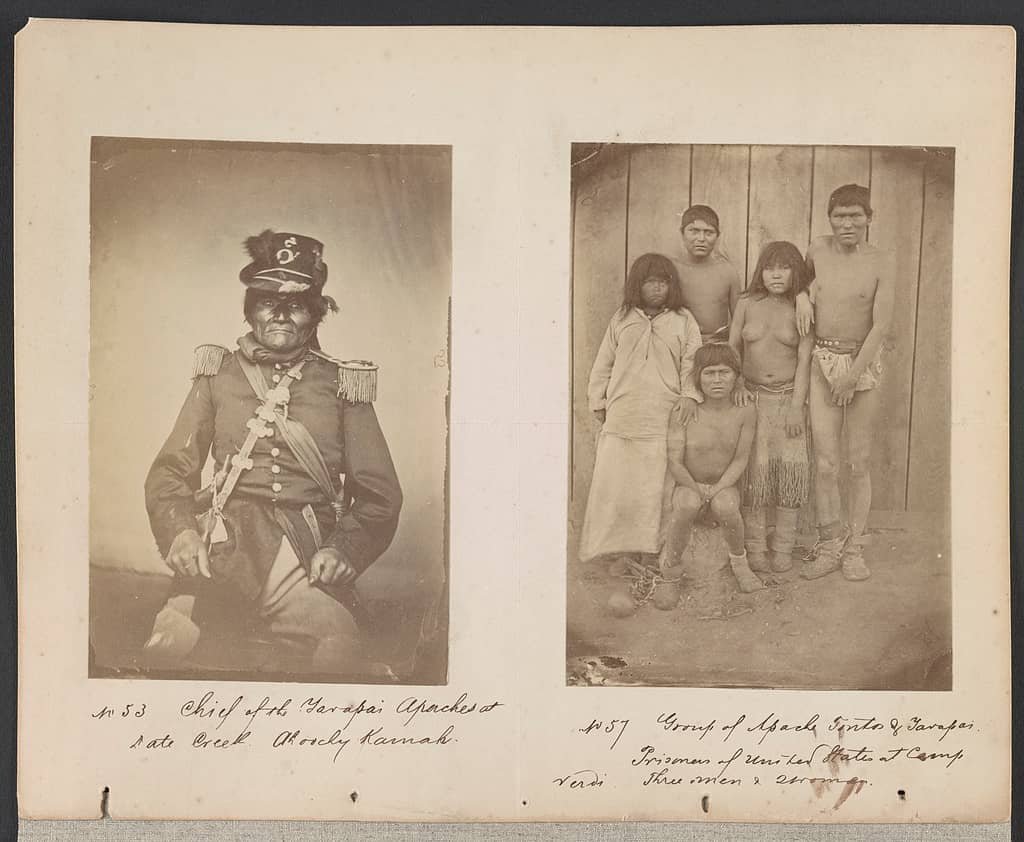
Apache are a Southern Athabaskan-speaking people, and Yavapai are an Upland Yuman-speaking people with close cultural ties to the Yuma and Mohave in Western Arizona.
But these differences often mattered little to newcomers in the Arizona Territory, wrote Braatz:
As Americans gained some sense of the distinctions between the Yavapai peoples and their Western Apache neighbors, they labeled the Yavapais, variously, ‘Apache-Mojaves,’ ‘Mojave-Apaches,’ ‘Apache-Yumas,’ and ‘Yuma-Apaches’; just as often, though, they simply used ‘Apaches.’ When the U.S. Army concentrated the four Yavapai peoples at Camp Verde in 1873, the prisoners became the ‘Verdes.’
The Yavapai weren’t identified accurately at the time of the battle, but even in the 20th century, stories of the cave’s events continued to misidentify the victims.
“When the story of the cave was made public, the Apaches had the remains of their tribesmen removed to an Apache burial ground,” reported an Arizona Highways article in February 1959.
In The Apache Wars, author Paul Andrew Hutton correctly identifies the Yavapai in the cave, but the massacre—one of the deadliest events of the entire Apache Wars—receives only two paragraphs of explanation.
Even when included in the story, the Yavapai were still considered mostly a side note.
Impact on the Yavapai
The Yavapai may have been lost in the larger context of the Apache Wars, but the casualties they sustained on December 28 were even more devastating. It’s estimated that 76 Yavapai men, women and children were killed that day (likely not 200, as reported in 1906).
There are no exact numbers on the Yavapai population in 1872, but estimates from army forts in the area, which could be wildly inaccurate, ranged between 1,500 and 2,000, according to anthropologist Sigrid Khera.
“For the Yavapai their losses at Skeleton Cave were worse than a Pearl Harbor or 9/11 attack because the percentage of their total population killed was so much greater,” wrote Khera in Oral History of the Yavapai.
In the 1970s, Khera interviewed two respected Yavapai elders—Mike Harrison and John Williams—who were born after the attack and lived at Fort McDowell Reservation until they died in 1983.
In interviews with Khera, both men expressed the massacre as an inflection point for their people:
The killing of a whole band of Yavapai by the U.S. Army in a cave above the Salt River Canyon—later called Skeleton Cave after the remains of the victims—was the event they [Harrison and Williams] related first and with the deepest emotions. It was retold innumerable times as the greatest tragedy for the Yavapai and the narrators in specific. They had lost many important relatives of their parental and grandparental generations. To them as the descendants it meant that they had to live a life in which many social ties were denied to them.
The Yavapai elders recounted visiting the cave in 1923, when they took Dr. Carlos Montezuma (Wassaja) to collect the bones remaining in the cave.
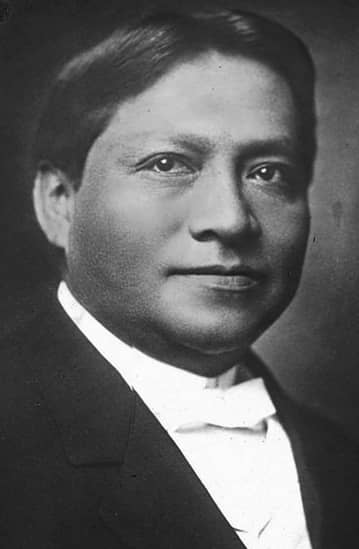
Montezuma was a Yavapai man who’d been kidnapped by the Pima as a child in 1871, then sold to an Italian photographer named Carlo Gentile.
Gentile took the boy east, and Montezuma eventually attended the University of Illinois and Northwestern University, becoming the first Native American man to earn a medical degree from a U.S. university.
Harrison and Williams described the emotional weight of their visit to the site, which is considered sacred by the Yavapai:
In that cave, on the wall, it looked like oil sprayed on. Down on the floor it looked like oil. There is that ‘oil’ all over. It is the blood. When the bullets hit the bodies, the blood got scattered all around. Looks awful. We found many bones. Lots of little bones also. When we bring the bones, Montezuma is standing there crying. And we all start crying right there. We see that blood on the wall. It is too bad for us. It is here that all our people died.
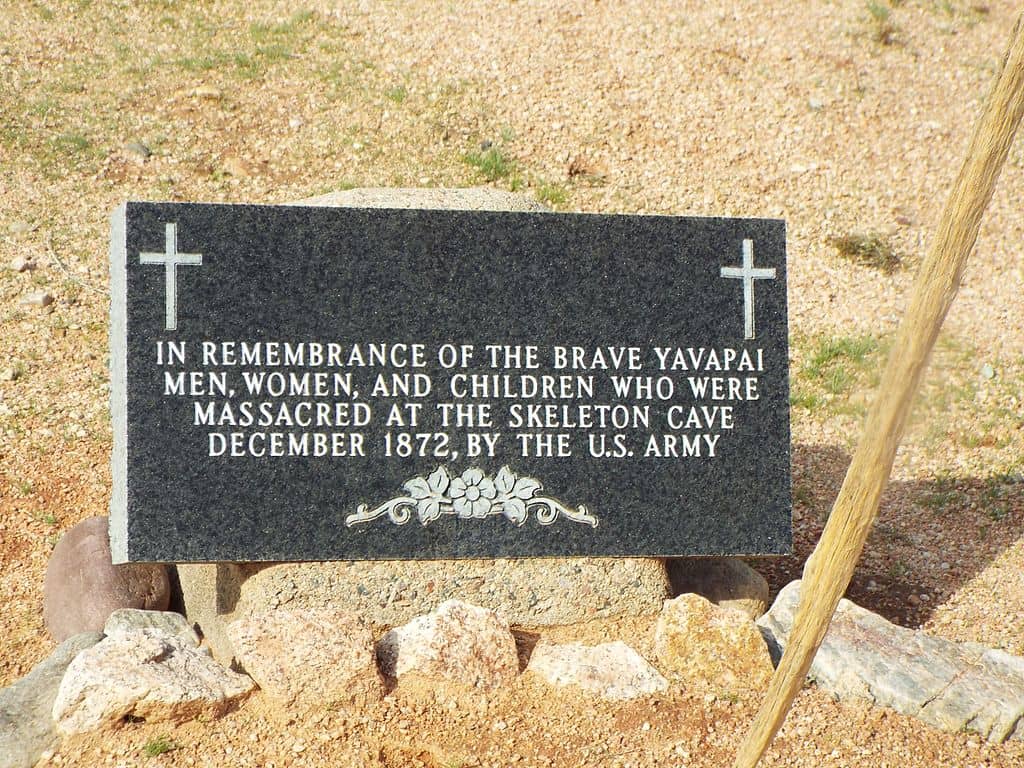
The bones collected were reinterred at Fort McDowell Cemetery, and in May 1985, the Fort McDowell Yavapai Nation held a memorial for the victims of the attack.
Hoomothya’s Story
In the days before the attack, a young Kwevkepaya boy named Hoomothya was captured by the company of Captain James Burns as it swept through the area between the Four Peaks and Salt River.
The boy had come from the cave, where his family remained. When the battle began several days later, he was taken by Burns’s company to the scene as it unfolded, and was likely at the top of the canyon, watching in horror, when it was over.
Hoomothya lost his father, two siblings, grandfather, cousins and other relatives in the massacre.
Captain Burns adopted the orphaned Hoomothya and thus began the boy’s life as “Mike Burns.” Burns served as a scout in the military, and attended the Carlisle Indian School for four years. He never adapted to white society, however, and later lived at Fort McDowell, where he also struggled to fit in with his own culture.
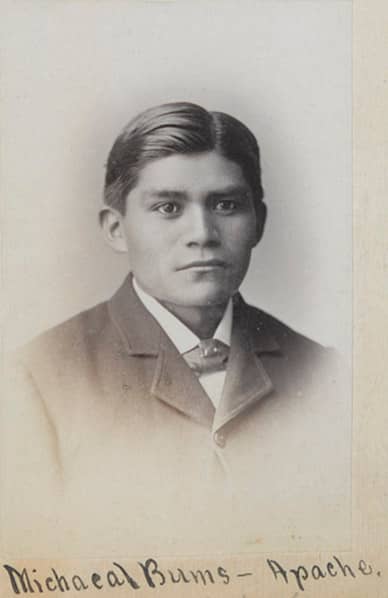
For years he collected what he could of Yavapai history; Burns worked on a manuscript for his autobiography for decades, but died in 1934 before it could be published.
In 2012, editor Gregory McNamee sorted through Burns’s manuscripts at the Sharlot Hall Museum and published The Only One Living to Tell: The Autobiography of a Yavapai Indian.
“It is a mysterious thing, the fact that I am alive to tell how I was saved, while every last one of my tribe was killed,” Burns wrote of the massacre.
The incident receives only a brief mention in the book, which mainly covers 1873 to 1886, but it’s a somber backdrop to the struggles Burns and his people faced in the following years.
In May 1873, the Yavapai were forced onto the Rio Verde Reservation near Camp Verde. They farmed the land there until 1875, when local business interests persuaded the government to move the Yavapai to the San Carlos Reservation, where 900 Western Apache lived 180 miles to the southeast.
The Yavapai March of Tears
In February 1875, more than 1,400 Yavapai and Tonto Apache embarked on a bitterly cold walk—their “March of Tears”—over 180 miles of the same Tonto Basin where they once lived freely.
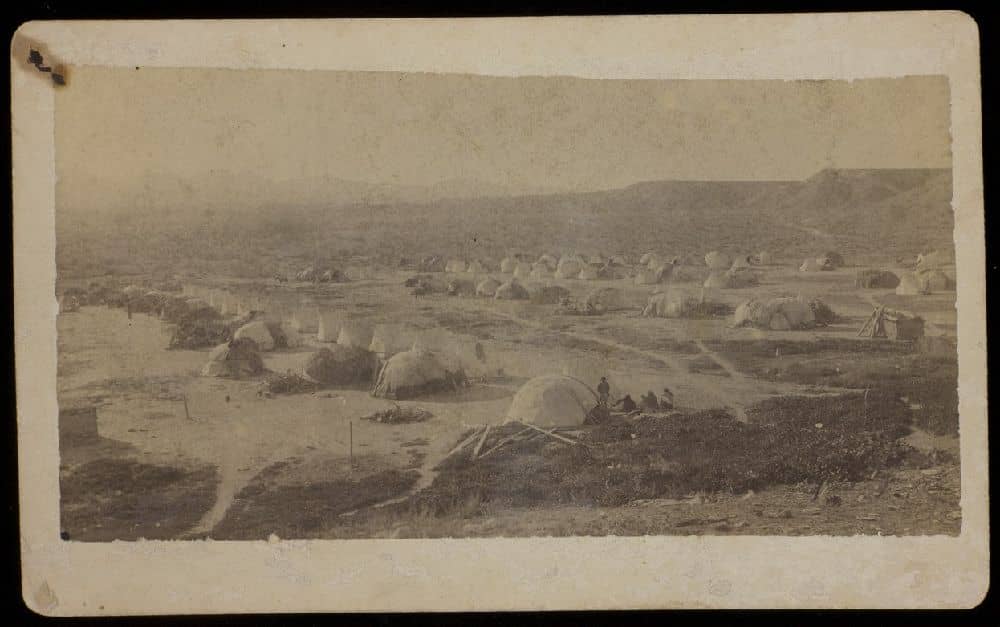
“For more than three weeks, the refugees walked, climbed, crawled, and waded through snow, mud, and streams,” wrote Braatz. More than 140 tribal members died during the march.
The San Carlos Reservation was outside of the Yavapai homeland, and it’s where they remained for more than 25 years, until the Fort McDowell Reservation was created on September 15, 1903.
Burns may not have lived to see his autobiography published, but today, his memory, and that of the Skeleton Cave Massacre, lives on in the meaningful, if not well-known, accounts that recognize the Yavapai and their distinct history and culture.
Today, the Fort McDowell Yavapai Nation is home to some 600 members, and operates a cultural center and museum where visitors can learn more about the Skeleton Cave Massacre, their trail of tears, and other events in Yavapai history.
Sources & Further Reading
- Bourke, John G. On the Border with Crook: General George Crook, the American Indian Wars, and Life on the American Frontier. Skyhorse, 2014.
- Bourke, John G. The Diaries of John Gregory Bourke, Volume 1: November 20, 1872, to July 28, 1876. University of North Texas Press, 2003.
- Braatz, Timothy. Surviving Conquest: A History of the Yavapai Peoples. University of Nebraska Press, 2007.
- Burns, Mike. The Only One Living to Tell: The Autobiography of a Yavapai Indian. University of Arizona Press, 2012.
- Hutton, Paul Andrew. The Apache Wars: The Hunt for Geronimo, the Apache Kid, and the Captive Boy Who Started the Longest War in American History. Crown, 2017.
- Roberts, David. Once They Moved Like The Wind: Cochise, Geronimo, And The Apache Wars. Touchstone, 1994.
- Worcester, Donald E. The Apaches: Eagles of the Southwest. University of Oklahoma Press, 1981.
- Williams, John, Mike Harrison, Sigrid Khera, and Carolina Butler, editors. Oral History of the Yavapai. Acacia Publishing, 2012.
D.T. Christensen is the founding editor of OldWest.org, a history website committed to sharing and preserving stories of the American West. He was born and raised in Phoenix, Arizona, studied journalism at Northern Arizona University, and spent decades exploring the landscapes and history of the American West before moving to Massachusetts.


https://shorturl.fm/2mXim