James Kirker: Lord of the Scalp Hunters
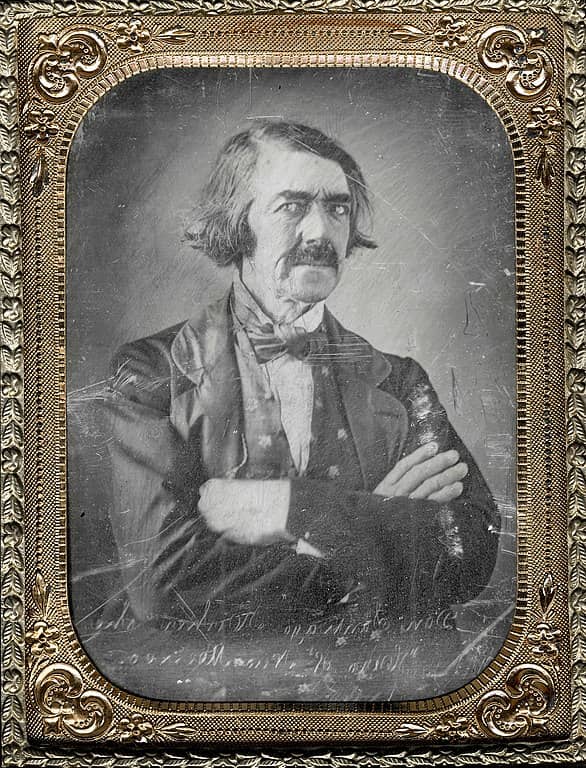
On July 7, 1846, a camp of peace-seeking Chokonen and Nednhi Chiricahua Apache men, women, and children was attacked by Mexican citizens of nearby Galeana, Chihuahua, as well as James Kirker and his crew of scalp-hunting mercenaries.
The attack occurred during one of Kirker’s campaigns to combat Apache raids in Chihuahua, something he’d been contracted to do on and off with Mexican authorities since the late 1830s. In Kirker’s account, he followed a trail of stolen livestock to a camp of Apache near Galeana and San Buenaventura.
Accounts of the Galanea Massacre vary widely, but most versions claim that the Apache—who, under the guidance of Chief Reyes, had been arriving in the area for several months as they awaited possibly treaty negotiations—were lured into a false sense of security by Kirker and Galeana citizens, who brought liquor to what appeared to be a celebration of potential peace.
But the meeting was a ruse. After drinking heavily the previous night, the Apache were summarily attacked and defeated in the early hours of the next day. More than 100 Apache were killed during the slaughter (most estimates are around 130 casualties). In Galeana, the event was considered a great success, and the scalps of the victims were paraded through Chihuahua City on poles as the town honored Kirker and his gang.
Two Kirker biographies mention the Galenea Massacre; in William C. McGaw’s Savage Scene: The Life and Times of James Kirker Frontier King, the event is briefly described but without a date or specifics. In Ralph Adam Smith’s Borderlander: The Life of James Kirker, 1793-1852, however, the Galeana affair is covered from multiple viewpoints.
First mentioned is Kirker’s purposely vague account: he reports that he and his men arrived at the scene while the massacre was already underway, and that the “people continued the attack until 130 Indians of all ages were dead.”
A Mexican official who investigated the massacre did not “state that Kirker was involved in the night attack, though the overall tenor of his report implicated Kirker,” wrote Smith.
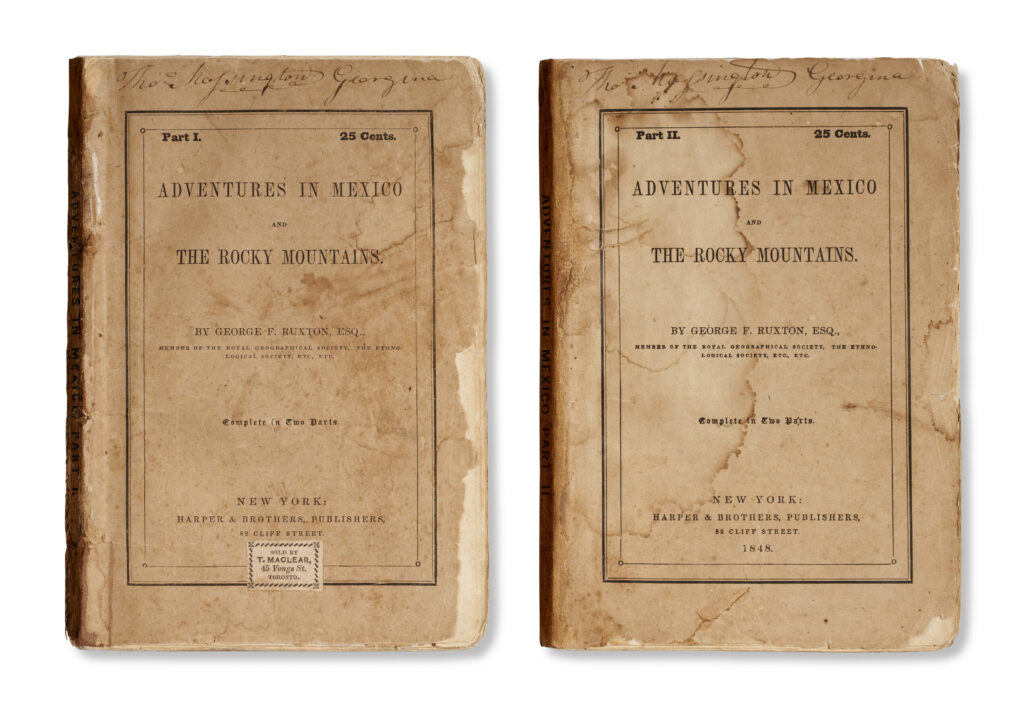
George Ruxton, a traveler in the region at the time, heard an eyewitness report of the massacre several months later and described it in his 1849 book, Adventures in Mexico and the Rocky Mountains:
The Mexicans, when they saw him [Kirker] approach with his party, suddenly seized their arms and set upon the unfortunate Indians, who, without even their knives, attempted no resistance, but, throwing themselves on the ground when they saw Kirker’s men surrounding them, submitted to their fate. The infuriated Mexicans spared neither age nor sex; with fiendish shouts they massacred their unresisting victims, glutting their long pent-up revenge of many years of persecution.
In all accounts, it was a combination of Mexican citizens and Kirker’s men who participated in the massacre. Smith believes Kirker “was not personally a primary participant,” but that the citizens killed the group, while Kirker’s “own men had cause to do the scalping as part of their job.”
Despite Chihuahua’s efforts to stop Apache raids by paying for scalps, this and other attacks by Mexican forces did nothing to quell Apache violence.
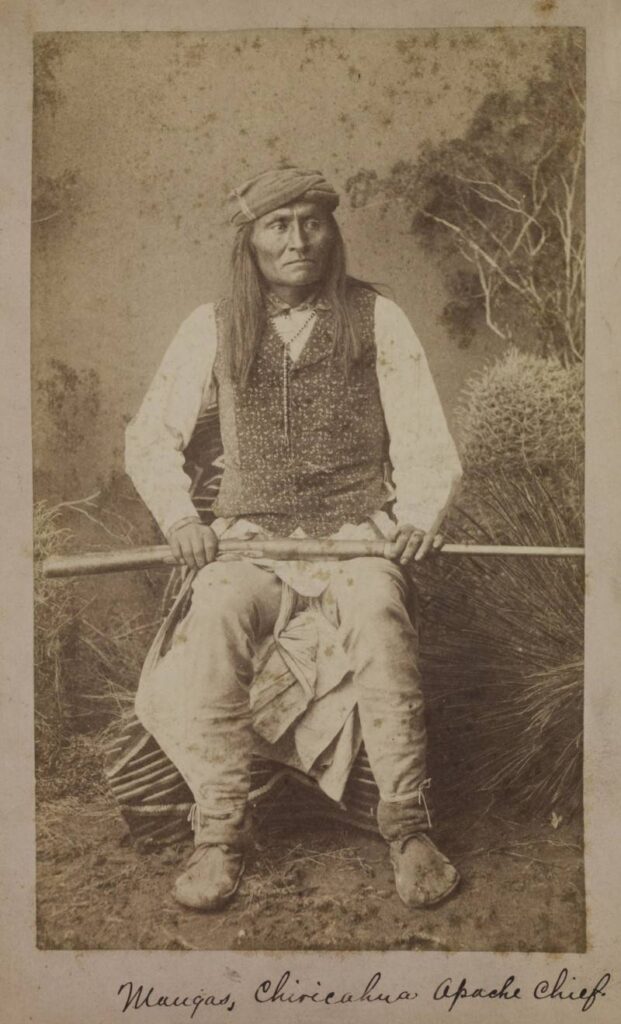
Instead, the Galeana Massacre led to a revenge raid on the same town later that year, wrote Paul Andrew Hutton in The Apache Wars:
So enraged were all the Chiricahua bands over Kirker’s Galeana massacre that retribution was planned at the tribal level. Almost every band had lost a friend or relative. The chief of the Warm Springs Apaches, Cuchillo Negro (Black Knife), called for a grand council of all the chiefs. Mangas Coloradas led his warriors to the council. Mangas’s son-in-law Cochise, who would become the greatest chief of the Chokonen, also attended. It was decided to attack Galeana itself. That night a huge fire was built and the people all gathered in a great circle as the drums beat and the singers raised their high-pitched chant to the heavens.
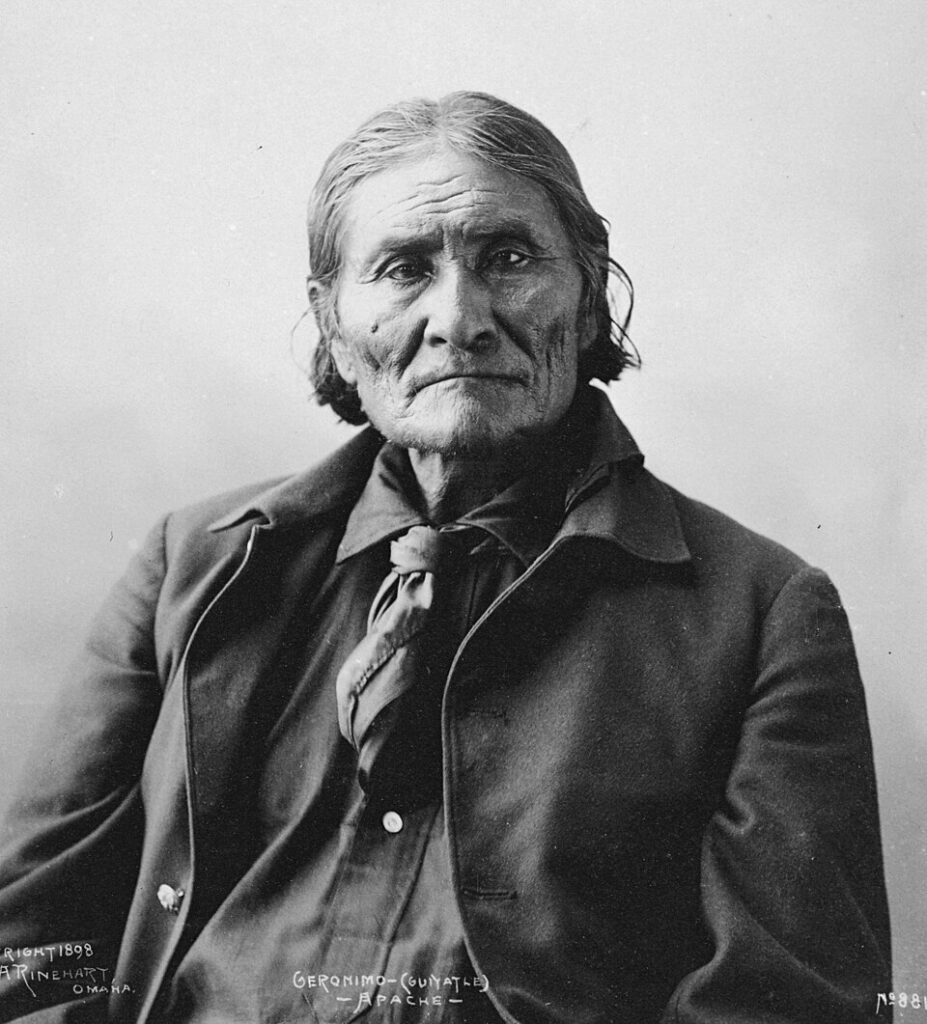
Another participant in the Galeana revenge raid was an 18-year-old Bedonkohe warrior named Goyahkla—today known as Geronimo.
Scalp-hunting may have made raids and counterraids worse in what Smith calls “a pitiful, plundered, scourged land” in northern Mexico, but the alternative—poorly trained troops from the Mexican Army—was also ineffective, which is why Kirker and his colleagues were often hired in the first place.
Author William B. Griffen explained why in Utmost Good Faith: Patterns of Apache-Mexican Hostilities in Northern Chihuahua Border Warfare, 1821-1848:
These troops were ill-trained and ill-fed, poorly dressed and poorly armed, and lacking almost entirely in discipline. The chronic dearth of weapons, ammunition, and adequate horses occasioned constant difficulties in keeping men in the field for very long at a time, which, coupled with incessant desertions, made it nearly impossible to intercept incoming Indian raiding squads. In the view of one critic, the Apache wars had elevated to the rank of officers unworthy men who had nothing to back up such a noble career except their uniforms, which they wore to the discredit of their predecessors.
With no good options, Mexican authorities turned to quirquismo, the self-styled warfare Kirker, called “Santiago Quirque” in Mexico, relied upon to take scalps.
In 1837, a proposed scalp bounty recommended payment of 100 pesos for the scalps of male Apache warriors, 50 pesos for Apache women, and 25 for children. In later years, prices for warrior scalps were said to reach 200 pesos apiece. “Though not the first Mexican bounty program for killing Indians, the plan was the first in Mexican history to offer payment for scalps,” wrote Smith.
For the Chihuahuan government, the pay-per-scalp model was a cheaper alternative to paying troops in the field. Unfortunately for Kirker and his men, there were several instances in which the authorities in Chihuahua lacked the funds to pay them for the scalps they brought in.
According to some accounts, that may have been one reason Kirker left Mexico to join U.S. forces in late 1846, before the U.S. invaded Mexico. Some stories claim that Chihuahua governor Angel Trias reneged on $30,000 worth of scalps, prompting Kirker to return to America despite having a family in Mexico and being a naturalized Mexican citizen.
Kirker’s reputation as an “Indian fighter” dated back to the late 1820s, when he guarded mule and wagon trains coming from the Santa Rita del Cobre mines—in what is today southern New Mexico—down to Chihuahua City. As paid mercenaries from the late 1830s into the 1840s, Kirker and his men reportedly killed 487 Apaches, though some accounts claim the total was much higher.
Whatever the number was, the Galeana Massacre and its 130 slain represented a significant number of victims, even for the notorious “Lord of the Scalp Hunters” Don Santiago Querque.
Sources & Further Reading
- Griffen, William B. Utmost Good Faith: Patterns of Apache–Mexican Hostilities in Northern Chihuahua Border Warfare, 1821–1848. University of New Mexico Press, 1989.
- Hutton, Paul Andrew. The Apache Wars: The Hunt for Geronimo, the Apache Kid, and the Captive Boy Who Started the Longest War in American History. Crown, 2017.
- McGaw, William C. Savage Scene: The Life and Times of James Kirker Frontier King. Hastings House, 1972.
- Smith, Ralph Adam. Borderlander: The Life of James Kirker, 1793–1852. University of Oklahoma Press, 2000.
D.T. Christensen is the founding editor of OldWest.org, a history website committed to sharing and preserving stories of the American West. He was born and raised in Phoenix, Arizona, studied journalism at Northern Arizona University, and spent decades exploring the landscapes and history of the American West before moving to Massachusetts.


Alprazolam
https://shorturl.fm/yOENy
Americans beginning their tirade of murderous racism even then.