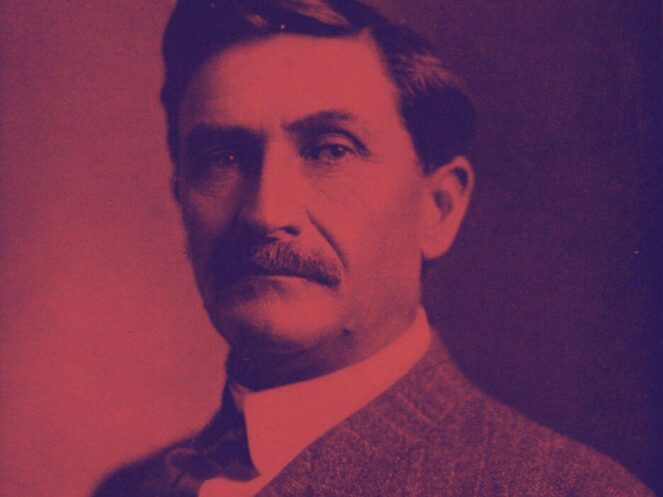
On the crisp morning of February 29, 1908, fifty-seven-year-old Pat Garrett loaded his buckboard, embraced his wife and children, and departed his ranch in New Mexico’s Organ Mountains accompanied by a man named Carl Adamson.
Financial struggles had plagued Garrett in recent years, leaving him with mounting debt and diminishing prospects. When Adamson and his business partner, James P. Miller, expressed interest in purchasing the former sheriff’s ranch in Bear Canyon, Garrett eagerly seized what appeared to be a stroke of good fortune.
The pair set out on the four-hour journey eastward to Las Cruces, where they planned to meet with Miller and Wayne Brazel—a ranch hand currently leasing the Bear Canyon property. Their meeting would determine Garrett’s financial future and, unknown to him, much more.
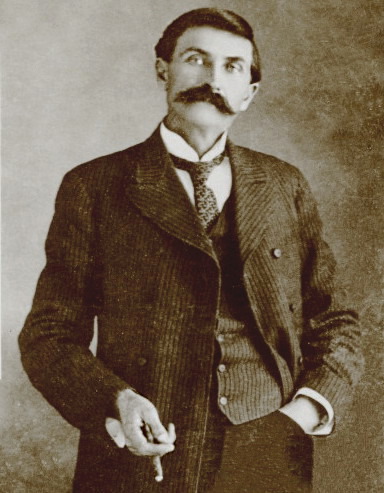
In the fall of 1907, Brazel had signed a five-year lease for Garrett’s land. Though Garrett had expected him to graze three to four hundred head of cattle, Brazel instead introduced approximately twelve hundred goats onto the property—much to Garrett’s growing frustration.
Goats were reviled by cattlemen throughout the territory; they devastated the landscape, leaving little forage for cattle. “They grazed the grass almost down to the roots,” Colin Rickards wrote in How Pat Garrett Died, “often worrying it out of the ground in their efforts to get every little bit of nutriment.”
Sensing an opportunity amid conflict, Brazel had proposed a compromise: he would cancel the lease if Garrett could locate a buyer for the goats. Adamson, conveniently, had expressed interest in purchasing the animals if it meant gaining access to the valuable land.
PHOTO
Their meeting in Las Cruces was intended to finalize these arrangements and—Garrett fervently hoped—provide a way to clear his debts while ridding himself of what he considered a plague of goats.
The Murder of Pat Garrett
During their journey, Brazel overtook the buckboard on horseback and engaged in a heated exchange with Garrett. The tension escalated when Brazel revealed there were now closer to eighteen hundred goats roaming the Bear Canyon property—a significant increase from the originally discussed number.
Garrett fumed at this revelation, while Adamson cautioned that such an increase might jeopardize their deal. According to Adamson, he and Miller had been prepared to purchase twelve hundred goats, but eighteen hundred pushed beyond acceptable limits.
As the three men—Brazel on horseback, Garrett and Adamson in the buckboard—approached within five miles of Las Cruces, Adamson requested that Garrett stop so he could relieve himself. Garrett obliged, bringing the buckboard to a halt and stepping down to do the same.
With his back turned to both men, Garrett stood vulnerable in the desert silence. Suddenly, a gunshot shattered the morning calm. A bullet tore through the back of Pat Garrett’s head, ensuring his imminent demise. As he collapsed to the earth, a second shot rang out, striking Garrett in the stomach.
In the aftermath, Adamson removed Garrett’s shotgun from the buckboard and placed it beside the lifeless body in the sand. He then covered the corpse with a robe. With Brazel’s horse now tethered to the buckboard, the two men proceeded toward Las Cruces to report the death of the legendary Pat Garrett.
The Cover-Up
Upon reaching town, Brazel and Adamson stopped at Henry Stoes’ residence, informing him that Brazel had killed Garrett in self-defense and wished to surrender. The three men proceeded to the Doña Ana County sheriff’s office, where Brazel formally turned himself in to Deputy Sheriff Felipe Lucero.
The account Brazel and Adamson presented to Lucero depicted a straightforward tale of self-preservation: they claimed that after a heated argument along the trail, Garrett had raised his shotgun toward Brazel during their stop, forcing Brazel to fire first—purely in self-defense.
Brazel made no attempt to conceal his role in Garrett’s death, but insisted his actions were necessary to protect his own life following their confrontation.
When Lucero and Dr. W.C. Field examined Garrett’s body, however, the scene revealed inconsistencies with this narrative. Garrett’s remains lay where the men had indicated, but his shotgun appeared oddly positioned, suggesting it had been arranged after the fact to support their story.
Garrett’s clothing was unfastened, indicating he was still in the midst of relieving himself when shot—not squared off for a confrontation in the desert as Brazel had claimed.
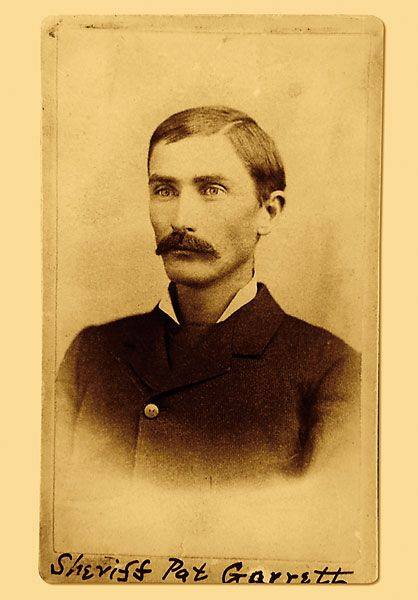
Further undermining their account, Garrett wore a driving glove on his right hand and had loaded his shotgun with birdshot, suggesting he anticipated no violence during the journey. Had he expected trouble, Dr. Field reasoned, he would have armed himself with a six-shooter and more lethal ammunition.
Most tellingly, Garrett hadn’t earned his frontier reputation by being careless or unprepared. Something about the scene troubled both the doctor and sheriff—and later, the journalists who reported on the killing.
Though the evidence didn’t support Brazel’s version of events, Adamson remained the sole witness and maintained a consistent story, leaving Lucero with few options. Two days after the murder, Garrett’s son Dudley Poe formally filed charges against Wayne Brazel.
The court set Brazel’s bail at ten thousand dollars, a substantial sum promptly provided by his employer, W.W. Cox—owner of a ranch adjacent to Garrett’s land in the Organ Mountains.
The Trial of Wayne Brazel
The trial didn’t commence until April 19, 1909—more than a year after Garrett’s death—yet the jury required a mere fifteen minutes to render a verdict of not guilty for Brazel.
By then, the proceedings had become merely ceremonial. Carl Adamson, the only witness to the murder, was never called to testify. The prosecution inexplicably failed to press Dr. Field regarding his initial observations at the crime scene.
The outcome appeared predetermined, as if the calculated plot to murder Pat Garrett in cold blood had reached its intended conclusion.
News of Garrett’s suspicious death spread rapidly through local communities, particularly among those familiar with the struggling rancher’s circumstances.
“Friends of Pat Garrett in Las Cruces claim that his death is the result of a conspiracy,” reported the Albuquerque Morning Journal on March 1—just one day after the murder.
Such suspicions were warranted. Over the decades, Garrett had accumulated numerous enemies, dating back to his fateful shooting of Billy the Kid on July 14, 1881.
While the Kid was undeniably an outlaw, he had also become something of a folk hero in certain circles of New Mexico society. Questions lingered about the ethics of how Garrett had shot Billy in the darkness of midnight at Pete Maxwell’s house in Fort Sumner.
More recently, in February 1896, prominent New Mexico attorney and politician Albert Jennings Fountain and his eight-year-old son Henry had vanished while traveling home to Mesilla from Lincoln, where Fountain had prosecuted several local cattle rustlers.
Their abandoned buggy was discovered off the main road, bearing clear signs of violence, but their bodies were never recovered. After months without progress, New Mexico Governor William Taylor Thornton enlisted Pat Garrett’s assistance.
Appointed as Doña Ana County sheriff, Garrett was motivated by an attractive eight-thousand-dollar reward for apprehending the murderers. His investigation led him to seek warrants for Oliver Lee, William McNew, Jim Gililland, and others—locals previously targeted by Fountain’s anti-rustling campaign.
Though Garrett gathered evidence implicating these men in the murders, they were ultimately acquitted, leaving Garrett with powerful new adversaries, including Lee and his defense attorney, Albert Bacon Fall.
This growing list of enemies expanded to include W.W. Cox, Garrett’s neighboring ranch owner who had later lent him thirty-five hundred dollars to cover accumulated debts and overdue taxes.
Cox’s desire to remove Garrett from the Organ Mountains stemmed from multiple motivations: beyond Garrett’s financial troubles and his work on the Fountain case, he possessed land with a reliable spring—an invaluable asset in the arid cattle country of southern New Mexico.
In 1907, Cox offered to purchase Garrett’s ranch, but Garrett firmly declined, unwittingly setting in motion the sequence of events that would culminate in his death.
“It was Garrett’s last chance to get some money and to save his life, but he could not know it,” wrote Rickards in How Pat Garrett Died.
The Hired Hit
Rebuffed, Cox, Lee, and their associates turned to an alternative strategy: hiring a professional killer. In late 1907, they convened with A.B. Fall, Jim Gililland, and others at the St. Regis Hotel in El Paso, Texas, where they enlisted the services of Jim “Killer” Miller.
By this time, Miller had established himself as a notorious hitman who could selectively choose his assignments. For this particular job, he stipulated specific conditions: the murder must appear to be committed in self-defense, and there must be a witness present.
This is where Wayne Brazel and Carl Adamson entered the narrative. Brazel’s role was to provoke Garrett—explaining the strategic importance of the goats—while Adamson presented himself as Garrett’s financial savior.
Their journey to Las Cruces on that fateful February morning represented the culmination of a scheme months in the making, orchestrated by some of the region’s most influential ranchers and political figures.
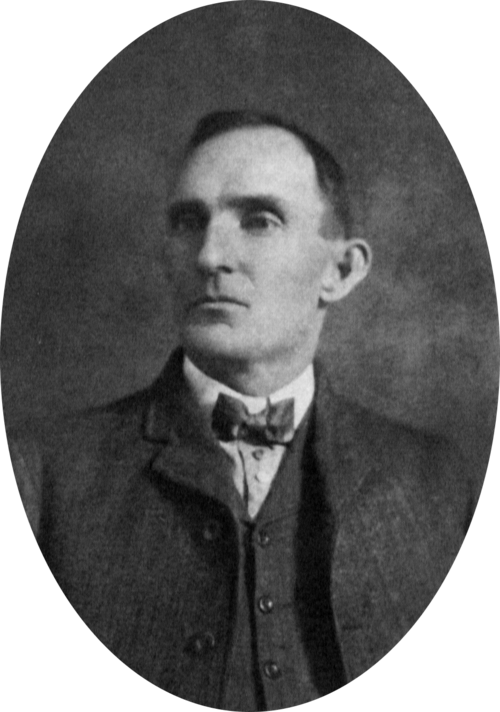
When Garrett halted his buckboard five miles from town and turned his back on Brazel and Adamson, the bullets that shattered the desert calm reportedly came not from either man, but from a short distance away, where “Killer” Miller allegedly waited concealed in the low desert scrub.
Miller specialized in ambushing his targets, and by the time Brazel and Adamson passed his hiding spot along the road, the hired assassin had already vanished on horseback.
Over subsequent years, rumors of the contract killing circulated throughout New Mexico. Many locals considered it common knowledge that Miller was the true architect of Garrett’s murder.
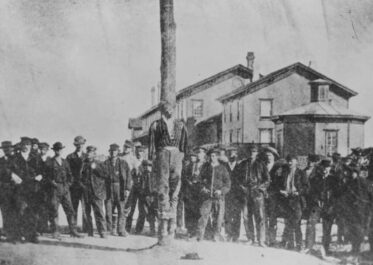
Miller reportedly confessed to the deed shortly before he was hanged by vigilantes on April 19, 1909—coincidentally, the same day Brazel was acquitted. For his part, Brazel maintained his version of events until the end, and no one was ever brought to justice for the murder of the man who shot and killed Billy the Kid.
Sources & Further Reading
- Albuquerque Morning Journal. March 1, 1908.
- Mills, James B. Billy the Kid: El Bandido Simpático. Denton: University of North Texas Press, 2022.
- Nolan, Frederick. The West of Billy the Kid. Norman: University of Oklahoma Press, 1999.
- Rickards, Colin. How Pat Garrett Died. Las Cruces: Palomino Press, 1970.
- Thomas, David G. Killing Pat Garrett, The Wild West’s Most Famous Lawman – Murder or Self-Defense?. Mesilla: Doc45 Publishing, 2019.
D.T. Christensen is the founding editor of OldWest.org, a history website committed to sharing and preserving stories of the American West. He was born and raised in Phoenix, Arizona, studied journalism at Northern Arizona University, and spent decades exploring the landscapes and history of the American West before moving to Massachusetts.


.jpg)
