N.K. Boswell: The Man Who Tamed Laramie City
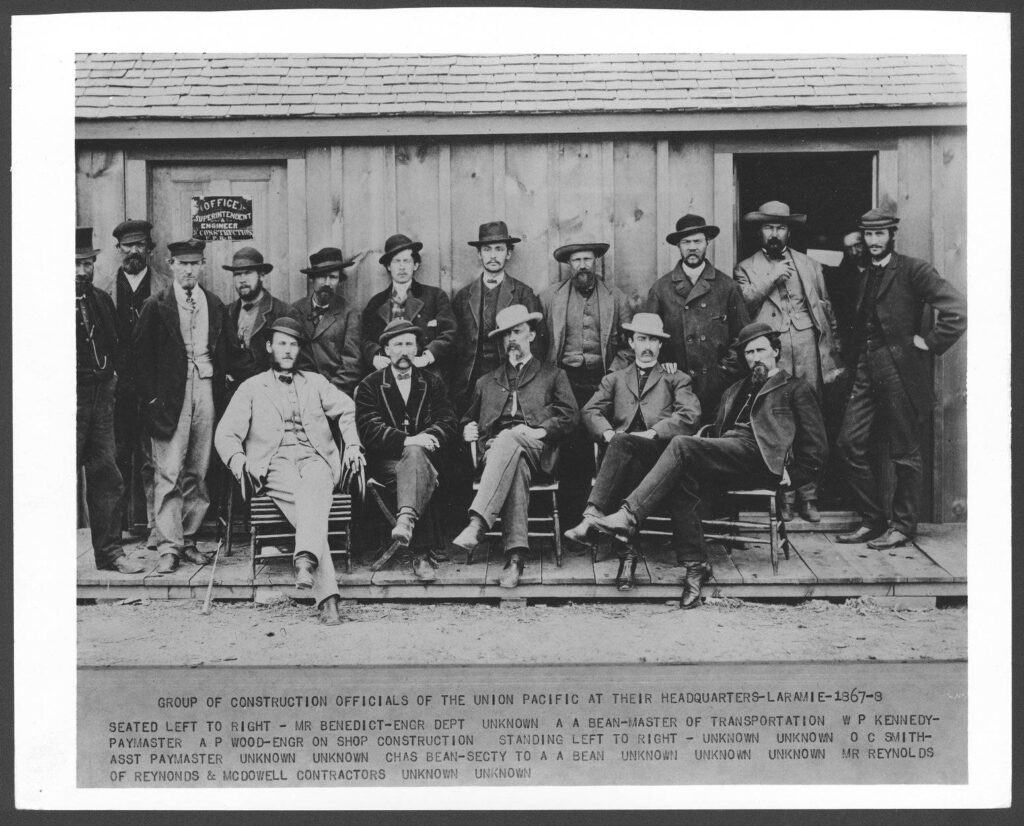
In the spring of 1868, the Union Pacific Railroad came roaring west across the plains, laying down ties, rails, and bridges on its way to meet the Central Pacific Railroad’s line and form what would become the Transcontinental Railroad.
The UP had reached Cheyenne in November 1867, then paused for winter before resuming in early 1868. Progress was initially slow for the UP, which broke ground in the summer of 1865 in Nebraska.
But as the railway ripped through the Great Plains (the traditional homelands of Arapaho, Cheyenne, Crow, Lakota and other peoples), the railroad workers—many of whom were Irish immigrants or Civil War veterans—picked up the pace.
The work was backbreaking, but workers found revelry in the nighttime activities available in makeshift settlements that followed the end of the track.
Hell on Wheels
These pop-up towns, known as “Hell on Wheels,” were temporarily constructed communities anchored by saloons, gambling dens, brothels, and other enterprises serving railroad crews and passers-by looking to unwind after long days of work.
The towns consisted of canvas tent lodges and false-front buildings that could be easily constructed, taken down, and transported as the UP moved west. Thanks to their transient nature, the towns were raucous and often lawless. The “end of track” was frequently in the middle of nowhere, far from the reach of traditional lawmen, and crime ran rampant as hardscrabble workers pursued their vices of choice.
In May 1868, the UP reached Laramie City—then part of Dakota Territory—a settlement they’d plotted out the previous month. The town was established on the Laramie River, on a pleasant stretch of plains between two mountain ranges. Nearby stood Fort Sanders, created in 1866 to protect overland travelers making their way west.
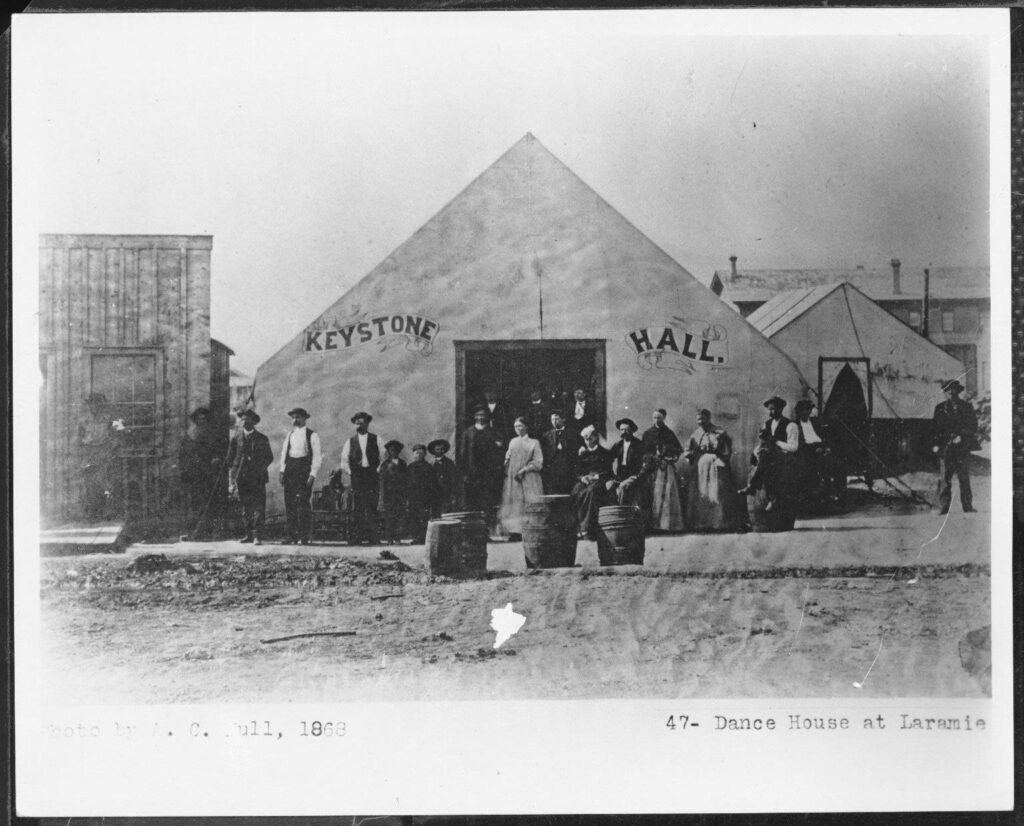
Speculators and entrepreneurs who had witnessed the success of Cheyenne—about 50 miles east of Laramie City—in 1867 quickly bought up hundreds of plots of land within weeks. By the time the track arrived in May, buildings were up and merchants stood eager to do business.
Like Cheyenne, Julesburg, and North Platte before it, Laramie City was a typical Hell on Wheels town, attracting not only off-work UP laborers and Fort Sanders soldiers, but also the types that wanted to mix it up with them, reported The Laramie Boomerang:
It was the resort of murderers, cut-throats, gamblers, thieves and all the rifraf commonly found following the line of railroad construction or flocking into new mining camps.
Although the fifteen or so town blocks of Laramie City had a lawless element like other end-of-line camps, many newly settled locals wanted to tame the town’s “roughs” and create an appealing—and profitable—city on the plains.
Each new railroad town experienced a temporary rush of business, but citizens who bought plots of land were interested in keeping the city booming well after the UP had come and gone. Within three months of its founding, Laramie City had a population of some 5,000 people—about 1,000 of whom were railroad workers.
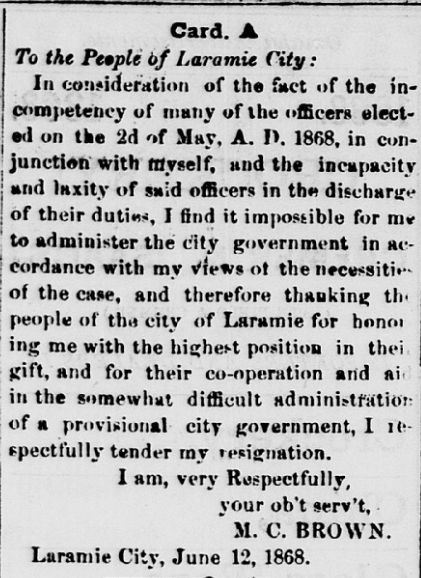
The same month the UP reached Laramie City, lawyer Melville C. Brown became the town’s first mayor, but by mid-June, he resigned because of “the incompetency of many of the officers elected” in early May.
As it became apparent that officials couldn’t properly govern Laramie City, some of the town roughs slipped into “self-appointed” positions. In a 1913 story on the city’s early days, The Laramie Boomerang reported that “the rough element from Dale Creek, Cheyenne and other places flocked to the town and literally took possession” of Laramie:
Outnumbering the peaceable citizens and having more time for politics, they secured control of the city government. The mayor, councilmen, marshal and police officers were one and all murderers and robbers. The art of fleecing the unwary was reduced to a science, and murders and holdups prevailed.
Within months of the town’s founding, there were two distinct camps: the roughs who profited from Laramie City’s lawlessness, and legitimate business owners and residents who wanted to clean the town up. The stage was set for a turbulent showdown.
The Disorder of Laramie City
Throughout the summer of 1868, crime reigned supreme in Laramie City. According to Dr. Murray Lee Carroll, former Director of the Laramie Plains Museum, “shootings and murders occurred daily, and after dark, respectable citizens stayed off the streets.”
Gamblers and miners were robbed of their earnings, and those who fought back would find themselves the victims of quickly drawn revolvers. The streets between gambling houses, saloons, and dens of iniquity became the scenes of countless crimes, often perpetrated by the men who appeared to run the town unofficially.
One of these men was Asa “Ace” Moore (or Moyer), a “rowdy” who ran the Diana saloon, a rough-and-tumble enterprise housed in “a log building forty by forty feet with chinked walls, dirt floor and canvas roof.”
Rumors claimed bodies could be found beneath the dirt floors of the saloon, or in the ravines out back, lending the establishment its “Bucket of Blood” nickname.
Moore, along with Con Wager (or Weiger, or Con Moore), reportedly ran the Bucket of Blood with an iron fist and plenty of bullets. Violence erupted often at the saloon, and Moore and Wager developed a reputation for robbing and drugging patrons, and even murdering those who didn’t give up their goods.
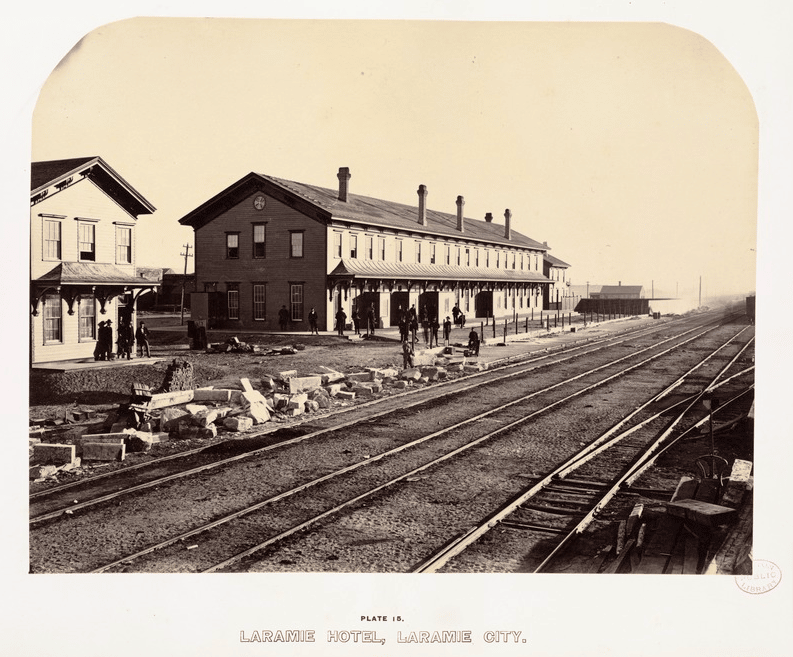
Wager and Moore—who may have acted as an unauthorized justice of the peace—hired “Big Steve” Long (or Steve Young) as town marshal, and together, the three set a murderous tone in Laramie City while “working both sides of the street,” reported one account.
By the fall of 1868, Long had allegedly killed at least seven men in town, and was thought to be involved in many more unsolved murders. He was said to have extorted local gamblers and miners, and forced nearby ranchers into giving up the deeds to their properties when they lost at the card tables.
It’s unclear how accurate these accounts are, but as The Laramie Boomerang reported of Moore, Wager, and Long, the “crimes committed by the Laramie gang are still unnumbered.”
Laramie City Vigilante Committee
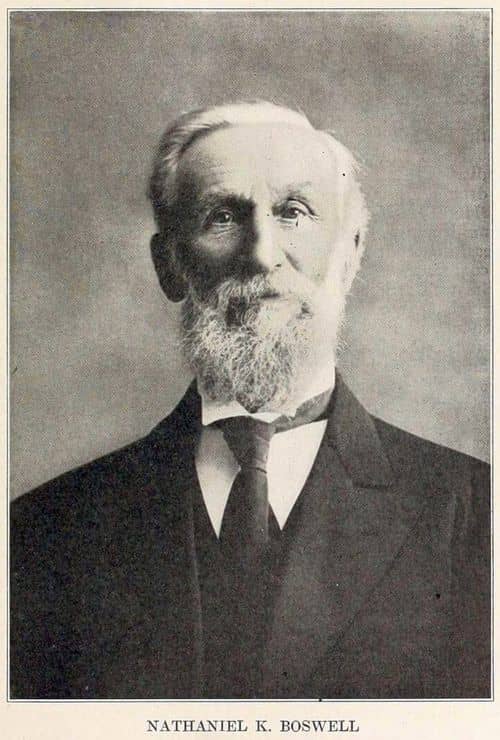
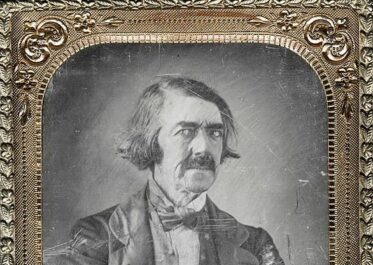
In October 1868, prominent citizens of Laramie City—mostly business and railroad leaders—formed a vigilante committee to rid the town of its agents of disorder. One of the committee’s most notable members was Nathaniel Kimball “N.K.” Boswell, the co-owner of a drugstore in town called Boswell & Taylor.
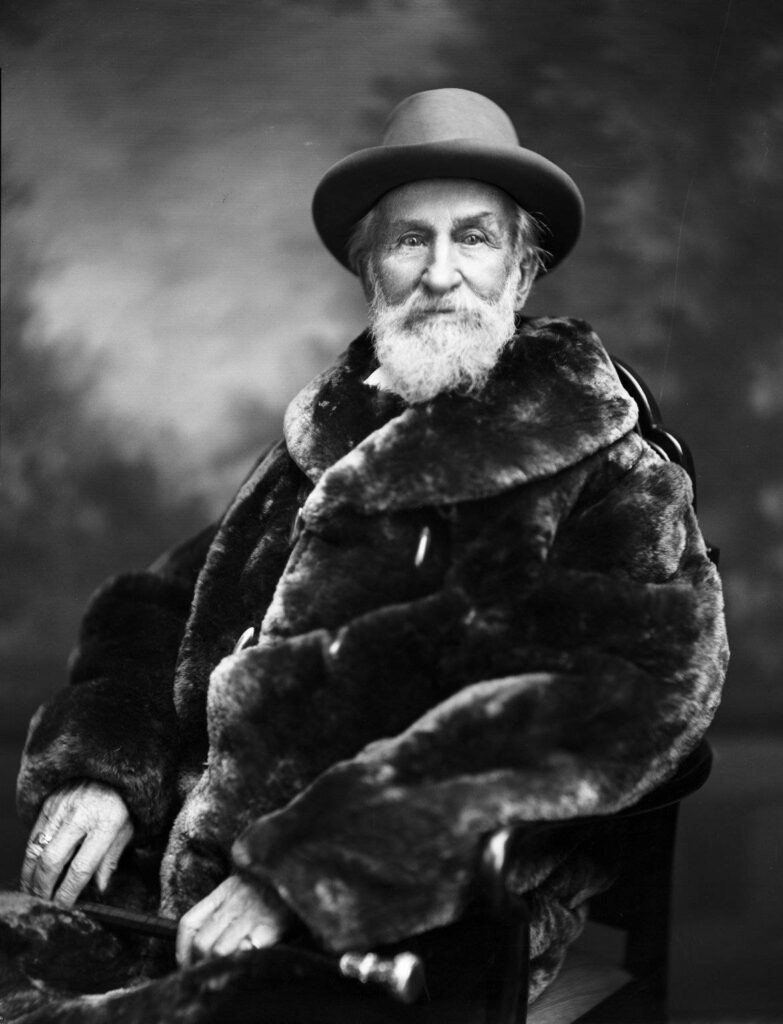
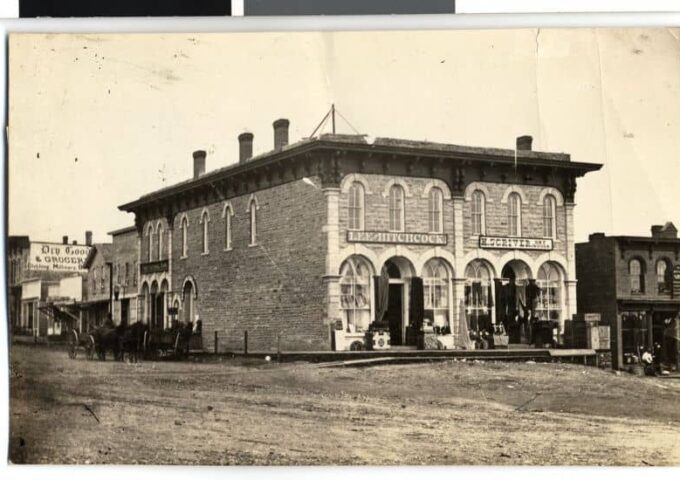
As owner of the drugstore, Boswell often saw victims of violence treated at his storefront on Eddy Street. As a concerned citizen and legitimate businessman—and later, lawman—Boswell helped organize the first vigilantes of Laramie City.
Early reports claim no more than 20 to 30 citizens joined the group’s initial efforts, but by mid-October 1868, the vigilante committee reportedly numbered 200 to 300 members.
Knowing the dangerous task ahead, the vigilante committee developed a strategy to rid the town of its roughs. “It was no sinecure, membership of this corps,” Hugh Bancroft wrote in 1887. “In their encounters with the desperadoes of the mountains bullets often flew freely, and death was the reward of bravery.”
Quickly, the vigilantes identified and “condemned six of the worst men of the town to death,” while naming another 40 men who would be forced to leave town or face the consequences.
Two of the six condemned were Asa Moore and Con Wager, as well as their associate, “Big Ed” (or “Big Ned”) Bernard (or Barnard). “Big Steve” Long was named one of the men who would be expelled from the young town on the plains.
In late October, the vigilantes enacted their plan. One story claims that Long, being closely watched by the committee, robbed a miner named Rollie “Hard Luck” Harrison, and killed the prospector during a shootout. When Long confessed to his fiancé, she told Boswell, who organized the vigilantes.
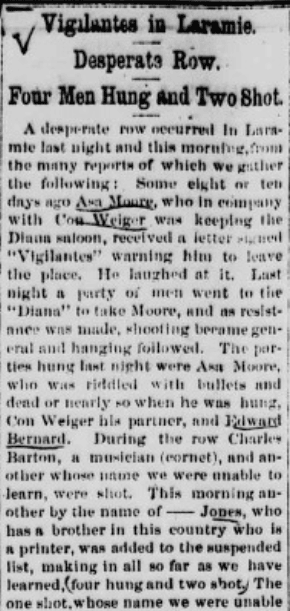
In other accounts, and perhaps more likely, the committee had planned to raid several gambling halls and saloons at once, and the Bucket of the Blood became the center of the action.
One night at the saloon, a firefight erupted between the vigilantes and the outlaws who ran the place. Several bystanders, including a musician and engine foreman, were killed in the melee. It was later reported that Con Wager fired the first shot of the “Laramie revolution.”
Hanging of the Outlaws
Asa Moore, Con Wager, and “Big Ed” Bernard were detained after the fight and taken to an unfinished cabin belonging to John Keane at what is today 3rd Street and Kearney Avenue. Overpowered by the sheer size of the committee, the three were summarily hanged.
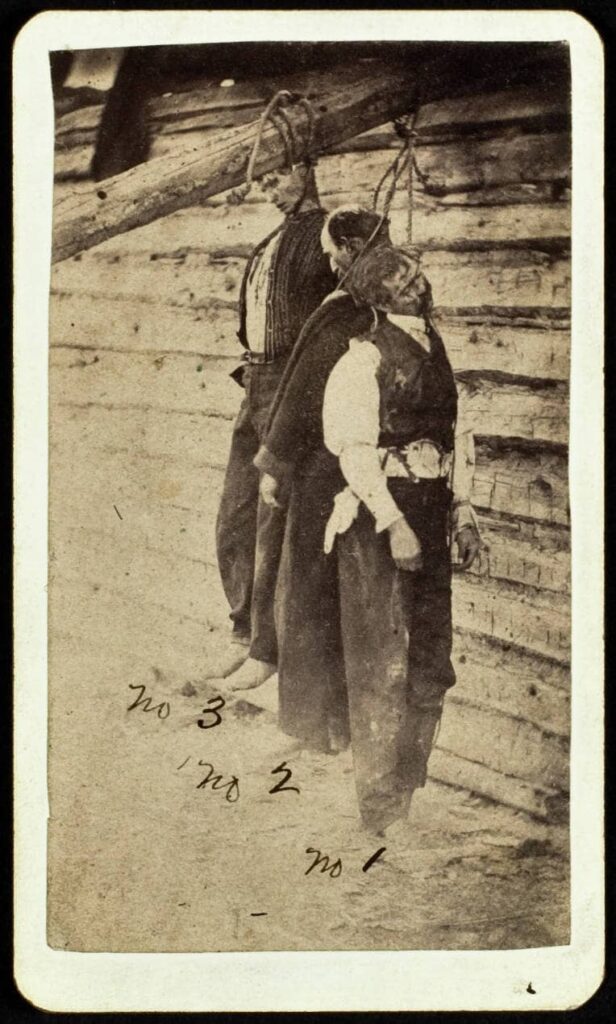
The outlaws faced what were likely excruciating deaths: the cabin’s structure wasn’t tall enough for a proper “drop” during the hangings, so they likely strangled to death instead of dying from broken necks. The vigilantes hardly cared: Moore was “riddled with bullets and dead or nearly so when he was hung,” reported The Cheyenne Leader.
Big Steve was next: the vigilantes found him at a ranch outside Laramie and forced him aboard a train to leave town. “No damned stranglers shall drive me from town!” he purportedly yelled, wrote Hugh Bancroft.
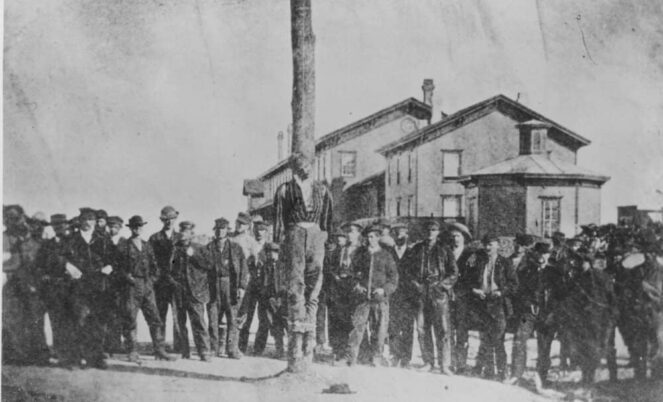
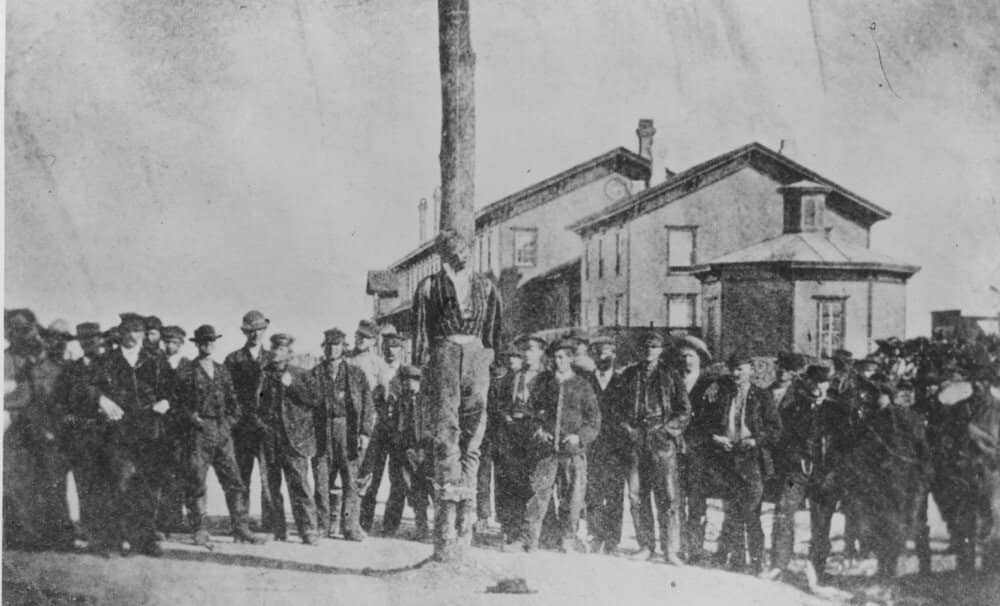
The hanging of “Big Steve” Long (or Young) in Laramie City, 1868. Albany County Historical Society.
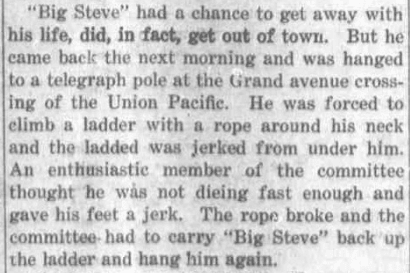
When Big Steve hopped off in defiance, he was again detained, and this time, he was hanged from a telegraph wire pole that had been installed along with the UP line as it came through town months earlier.
Despite the lack of a formal trial for the criminals, there was no remorse from the town’s citizens, reported The Cheyenne Leader:
Hundreds of people had gathered to the scene of the execution, but not one of them attempted to protest or interfere. All this took place in open daylight, with not one Vigilante masked or in any way disguised, neither did any one of that dread organization appear in any way to doubt the propriety or fear the consequences of this act.
The bodies of Moore, Wager, Bernard, and Long were collected and unceremoniously “dumped into one wide, deep grave” outside of town. The vigilantes ousted more outlaws from Laramie, including a man named Jones, who “was taken from the sleeping car on the U.P.R.R. passenger train, where he had taken refuge as a woman,” reported The Montana Post.
The four hangings of Laramie City, orchestrated by men like N.K. Boswell, were enough to rid the town of its most unsavory characters. Some of the vigilantes followed outlaws to Cheyenne, ensuring they continued on their way beyond the still-young railroad towns of the Great Plains.
Shedding its reputation as a hard-knock Hell on Wheels town, Laramie City finally “passed through fire and blood to become a city of peaceful homes, churches, schools and universities,” recalled The Laramie Boomerang.
N.K. Boswell’s Legacy
“The vigilantes then were disbanded, and Laramie City assumed a cloak of respectability,” wrote Gladys B. Beery in Sinners and Saints: Tales of Old Laramie City.
By 1869, Laramie City had become part of the newly created Albany County, and in May, Wyoming territorial governor John Allen Campbell named N.K. Boswell the county’s first sheriff.
Though Boswell was already a successful merchant, he appeared to take to the law just as easily, and was elected sheriff three more times over the following years. In 1872, he became the first warden of the Wyoming Territorial Prison—the same prison Butch Cassidy called home from 1894 to 1896 for stealing horses.
In the 1870s, Boswell also held positions as marshal of Laramie City and as a deputy U.S. marshal. Some accounts claim he helped Deputy Marshal St. Andre Durand Balcombe capture Jack McCall in Laramie City after the gambler had bragged about killing Wild Bill Hickok several months earlier.
In 1883, Boswell was hired as a lead stock detective by the Wyoming Stock Growers Association, applying the same tenacity and discipline on the range as he did as a vigilante and lawman. One account claimed he shot and injured a rustler from 220 yards with a pistol placed upon his knee.
Members of the early Laramie City vigilante committee may have numbered in the hundreds, but Boswell alone “did more than any other one man to bring peace and law into this section,” reported The Laramie Boomerang in 1913.
Today, the Boswell Ranch southwest of Laramie is on the National Register of Historic Places, and includes several log structures dating back to the 1870s.
There’s also a Boswell Drive in town, just south of the streets named after famous frontier figures like Kearney, Custer, and Sheridan. Boswell’s name might not be as well-known as those to the north, but he played an undeniably brave role in cleaning up the “Gem City of the Plains” in its earliest days.
Sources & Further Reading
- Albany County Historical Society. “Charismatic Lawman N.K. Boswell; He Brought Law and Order to Laramie — Albany County Historical Society.” Albany County Historical Society, May 14, 2021. https://www.wyoachs.com/people/2020/3/20/charismatic-lawman-nk-boswell-he-brought-law-and-order-to-laramie.
- Albany County Historical Society. “Laramie Mayor, Former Sheriff Both Die With Boots off Despite Vigilante History — Albany County Historical Society.” Albany County Historical Society, May 16, 2021. https://www.wyoachs.com/people/2018/3/2/laramie-mayor-former-sheriff-both-die-with-boots-off-despite-vigilante-history.
- Bancroft, Hubert Howe. The Works of Hubert Howe Bancroft: Popular Tribunals. 1887, 1887.
- Beery, Gladys B. Sinners & Saints: Tales of Old Laramie City, 1994.
- “Boswell Ranch,” n.d. https://wyoshpo.wyo.gov/index.php/programs/national-register/wyoming-listings/view-full-list/359-national-register-of-historic-places.
- Kreck, Dick. Hell on Wheels: Wicked Towns Along the Union Pacific Railroad. Fulcrum Publishing, 2016.
- Larson, T. A. History of Wyoming. University of Nebraska Press, 1990.
- Nash, Jay Robert. Encyclopedia of Western Lawmen and Outlaws. Da Capo Press, 1994.
- O’Neal, Bill. Encyclopedia of Western Gunfighters. University of Oklahoma Press, 1979.
- UWYO. “About Laramie, Wyoming | University of Wyoming,” n.d. https://www.uwyo.edu/uw/aboutuw/about-laramie.html.
- Wyoming Historical Society. “Albany County, Wyoming | WyoHistory.org,” n.d. https://www.wyohistory.org/encyclopedia/albany-county-wyoming.
- “History and Directory of Laramie City Wyoming Territory,” n.d. https://www.ahgp.org/wy/.
D.T. Christensen is the founding editor of OldWest.org, a history website committed to sharing and preserving stories of the American West. He was born and raised in Phoenix, Arizona, studied journalism at Northern Arizona University, and spent decades exploring the landscapes and history of the American West before moving to Massachusetts.


Leave a Reply