The Porvenir Massacre: A Borderlands Tragedy
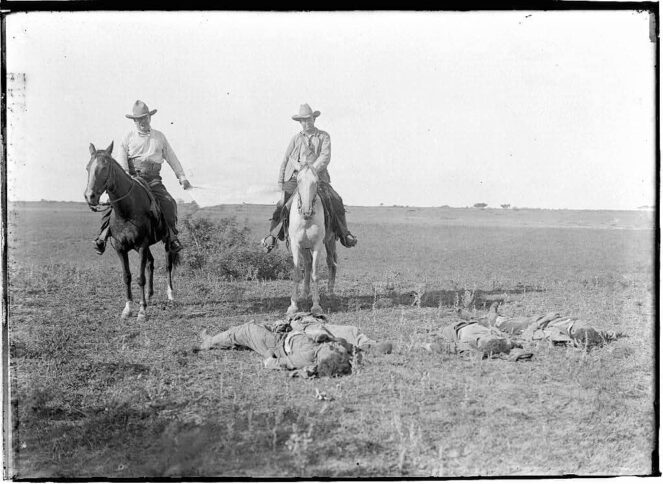
Sometime after midnight on January 28, 1918, Company B of the Texas Rangers—under the command of Captain James Monroe Fox—rode into the small village of Porvenir, Texas, nestled on the banks of the Rio Grande.
Porvenir (meaning “future” in Spanish) was a remote farming community of approximately 140 residents in Presidio County, situated “in the wildest of the wild Big Bend country,” as one newspaper described it.
The village consisted primarily of families from Mexico who had relocated to the region to work as laborers on the larger ranches throughout the Big Bend area. Among them were landowners like Manuel Morales, who possessed more than 1,600 acres in the vicinity. These families lived in modest, adobe-style jacales constructed of poles, mud, and clay; they herded goats and cultivated crops. The community had an Anglo school teacher, Harry Warren, who was well-respected by the residents.
By most accounts, Porvenir was a peaceful, secluded settlement.
Captain Fox and the Rangers, however, harbored darker suspicions about the village. They believed Porvenir sheltered Mexican bandits—raiders who had reportedly crossed the border in recent years to terrorize ranches throughout the Texas borderlands.
Mexican “bandits,” as they were commonly labeled at the time, were blamed for killing Anglo settlers, stealing livestock, robbing stores, and numerous other crimes in the region.
During the 1910s, as the Mexican Revolution raged south of the border, Anglo families in the Big Bend region lived in fear of revolutionaries entering Texas, causing destruction, and then retreating across the Rio Grande.
Some of this fear was justified. There had indeed been raids on U.S. soil—including Pancho Villa’s infamous 1916 attack on Columbus, New Mexico—but there was also widespread and unwarranted paranoia.
At the height of anti-Mexican sentiment, any male Mexican in the region risked being labeled a bandit, greaser, or villista simply because of his appearance.
“The figure of the menacing Mexican bandit was cemented in popular American imagination in this era,” wrote Monica Muñoz Martinez, author of The Injustice Never Leaves You: Anti-Mexican Violence in Texas.
The Texas Rangers, tasked with patrolling the borderlands and halting international banditry, often employed a shoot-first, ask-questions-later approach. Few Rangers embodied this aggressive stance more than Captain Fox, whose reputation for ruthless brutality was well-established throughout the region.
Robert Keil, a cavalryman present at Porvenir on the night of January 28, later wrote that the massacre “was only one of many similar incidents Fox had a big hand in, and it was he who kept the Upper Big Bend red hot.”
Tensions in Texas
On December 25, 1917, a raiding party from Mexico—believed to be villistas under Pancho Villa—attacked the Brite Ranch southeast of Porvenir. Though the group of approximately forty raiders was eventually driven back during a shootout, they managed to break into the Brite’s store and steal supplies, including shoes and clothing.
During the attack, an Irish postmaster named Mickey Welch arrived with two Mexican passengers. The raiders killed the passengers and hanged Welch by the rafters in the store, then slit his throat when he didn’t die quickly enough.
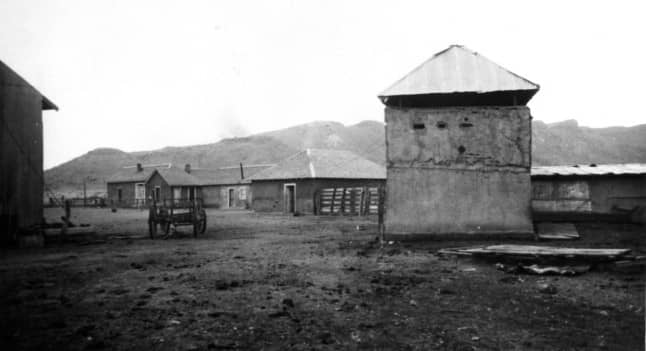
The raiders were eventually pursued across the Rio Grande by soldiers of the Eighth Cavalry, who killed several of the bandits. In the early weeks of 1918, the Texas Rangers focused their efforts on avenging the raid and apprehending the perpetrators.
On January 26, Captain Fox and the Rangers searched Porvenir and discovered some residents wearing items of clothing supposedly stolen from the Brite Ranch during the Christmas raid.
Though no evidence indicated that any raiders were living among the villagers, the clothing alone was enough to spur the Rangers to action. Later investigations would reveal that the clothing worn by the people of Porvenir wasn’t stolen from the Brite store at all, but had been purchased there in the months prior.
The following day, the Rangers rode to the camp of the Eighth Cavalry and requested assistance from Captain Harry Anderson, who didn’t believe Porvenir harbored any bandits. However, Fox presented a letter from Colonel George T. Langhorne requesting the cavalry’s aid, so Anderson and soldiers from Troop G agreed to accompany the Rangers on another search of Porvenir.
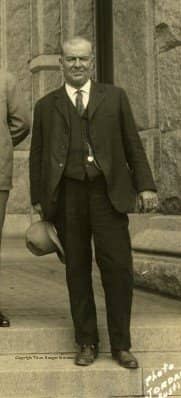
Joining the Rangers and cavalrymen were four local ranchers—Buck Pool, John Pool, Tom Snyder, and Raymond Fitzgerald—bringing the total group to approximately forty people, according to one account.
When this combined force arrived at Porvenir on the night of January 28, the troops surrounded the town while the Rangers went door to door, forcibly entering homes and removing men of working age.
They gathered fifteen men from the village—ranging in age from sixteen to seventy-two—and, without explanation, bound them and led them into the desert.
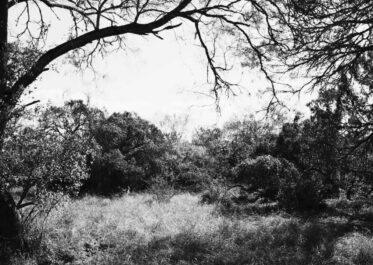
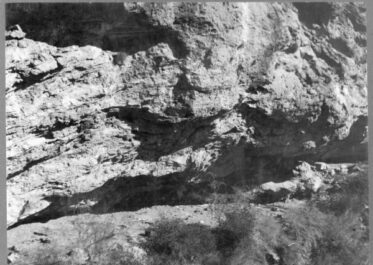
Beside a small bluff, the Rangers executed all fifteen men at close range. Bullets, bullet fragments, and casings discovered in 2015 suggest the Rangers first fired from several feet away before approaching the group and shooting them at point-blank range to complete the killings.
Throughout the raid and execution, the fifteen men and their families were given no opportunity to defend themselves, and the murders were carried out without explanation. Witness reports indicate the Rangers shouted at the men, asking if any of them were Chico Cano—a wanted raider who wasn’t present—but otherwise provided no information about what was happening.
“The Rangers and the four cowmen made 42 orphans that night,” wrote Harry Warren, the Anglo school teacher who knew the hardworking families of Porvenir well.
The Massacre
The Eighth Cavalry soldiers, who had supposedly remained in town, soon heard gunshots piercing the dark desert night.
Robert Keil, who recalled that night in Bosque Bonito: Violent Times along the Borderlands during the Mexican Revolution, described the scene leading up to the executions:
…and then it seemed that every woman down there screamed at the same time. It was an awful thing to hear in the dead of night. We could also hear what sounded like praying, and of course, the small children were screaming with fright. Then we heard shots, rapid shots, echoing and blending in the dark.
When the soldiers rode toward the sound of gunfire, Keil recalled, they encountered a horrific scene:
At the foot of the bluff we could see a mass of bodies, but not a single movement. The bodies lay in every conceivable position, including one that seemed to be sitting against the rock wall.
As the soldiers arrived at the bluff, the Rangers departed, claiming they had eliminated the bandits they sought. It was evident, however, that on January 28 outside Porvenir, there “was not a single bandit in the fifteen men slain,” Captain Anderson later reported.
The Porvenir Massacre Aftermath
In the aftermath of the massacre, surviving family members—devastated mothers, children, and elderly—collected the dead and carried them across the Rio Grande for burial in Mexico. They abandoned the town, fearing another attack, and the cavalry eventually burned the settlement to the ground.
Within days, Captain Fox attempted to reframe the event as something more heroic. His initial report claimed that while questioning a group of Mexicans, the Rangers had been fired upon and returned fire, resulting in a shootout that left fifteen men dead.
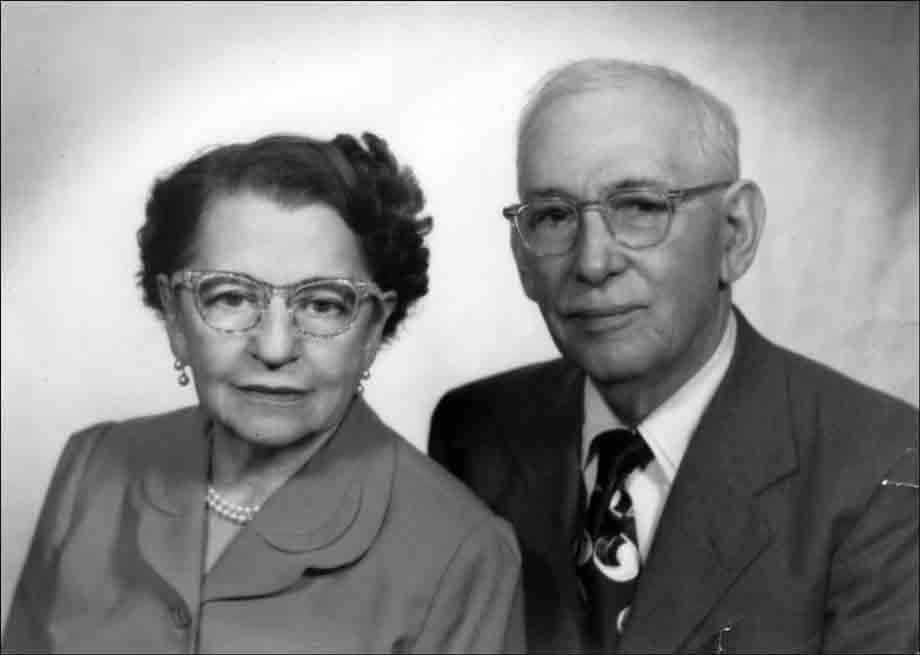
Fortunately for the victims, school teacher Harry Warren immediately began documenting what truly happened at Porvenir. Though not present during the raid, he spent the following days interviewing family members who had witnessed the event firsthand, including young Juan Flores (age eleven or twelve), who wouldn’t speak about the massacre until he reached ninety-five years of age.
Warren recorded the identities of the deceased: Antonio Castañeda, Longino Flores, Alberto Garcia, Eutimio González, Ambrosio Hernández, Pedro Herrera, Severiano Herrera, Vivian Herrera, Macedonio Huerta, Tiburcio Jácquez, Juan Jiménez, Pedro Jiménez, Serapio Jiménez, Manuel Morales, and Román Nieves.
Warren’s own father-in-law, Tiburcio Jácquez, was among those murdered.
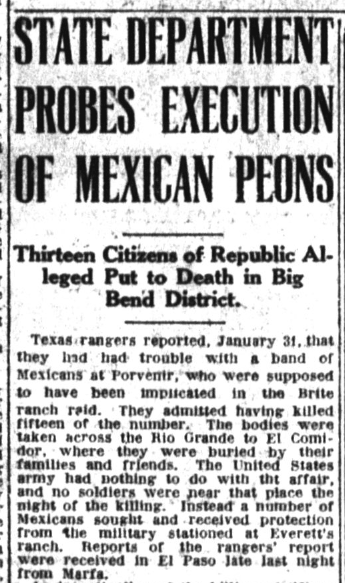
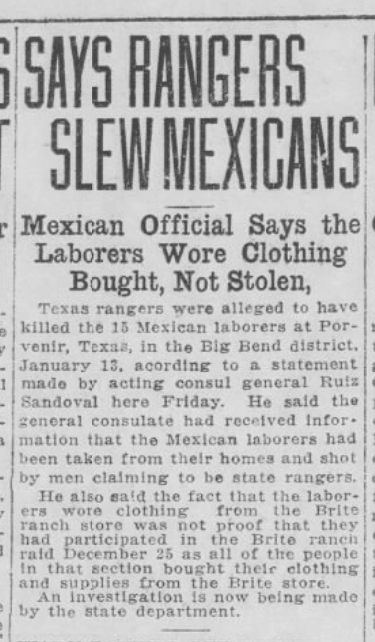
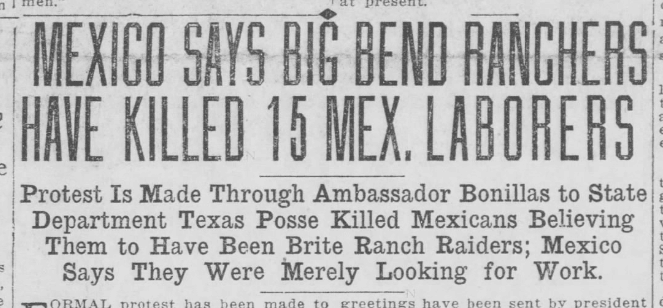
Armed with Warren’s documentation and eyewitness accounts from Porvenir families now living south of the border, the Mexican government conducted an inquiry and forwarded its report to U.S. authorities. Nearly two weeks passed before news of the massacre reached the American public.
“The wholesale killing was known in El Paso only to a few persons and was carefully concealed from the newspapers until the report was received at the Mexican general consulate,” reported the El Paso Times on February 8, 1918.
As the truth about Porvenir emerged, so did conflicting official accounts from the Texas Rangers and the Eighth Cavalry, who initially claimed they weren’t present at the scene at all. The military later acknowledged that soldiers were present but maintained they did not participate in the killings.
Evidence uncovered by archaeologist David Keller in 2005, however, suggests that some of the casings and bullet fragments found at the execution site included military-issued ammunition, which may “strongly implicate the U.S. Cavalry,” Keller said.
Criminal Inquiries
Mexico’s investigation eventually prompted two U.S. inquiries into the massacre, though these produced few meaningful consequences. None of the Rangers ever faced criminal charges, though Company B was disbanded, five Rangers were reassigned, and Captain Fox reluctantly resigned after facing mounting political pressure.
In 1919, Texas State Representative José Tomás Canales launched a broader investigation of the Texas Rangers, alleging the force routinely overstepped its authority along the border through racial profiling, intimidation, violence, and unjustifiable crimes like those committed at Porvenir.
The investigation concluded that the fifteen men of Porvenir “were murdered by said Rangers without any justification or excuse and without giving said Mexicans an opportunity to prove themselves innocent of the offenses charged against them.”
The Canales investigation compiled more than 1,500 pages of testimonies and specific examples of misconduct, but like earlier inquiries, it brought no justice to the families of the destroyed community that once stood near the Rio Grande.
While the investigation acknowledged that the Rangers had consistently violated state and federal laws, it did little beyond this recognition.
The Canales hearings reportedly led to better enforcement of existing policies but did little to address the atrocities committed by the Texas Rangers in the borderlands during the years of the Mexican Revolution.
To this day, the Texas Rangers have never issued a formal apology to the descendants of the fifteen Porvenir Massacre victims.
Sources & Further Reading
-
Keil, Robert. Bosque Bonito: Violent Times along the Borderland during the Mexican Revolution. Alpine, TX: Center for Big Bend Studies, 2002.
-
Monica Muñoz Martinez, “Border Fears,” Lapham’s Quarterly, October 25, 2018, https://www.laphamsquarterly.org/roundtable/border-fears.
- Martinez, Monica Muñoz. The Injustice Never Leaves You: Anti-Mexican Violence in Texas. Cambridge, MA: Harvard University Press, 2018.
- Monica Muñoz Martínez, “The Porvenir Massacre: A Tragic Chapter in Texas History,” Texas State Historical Association, last modified March 7, 2019, https://www.tshaonline.org/handbook/entries/porvenir-massacre.
D.T. Christensen is the founding editor of OldWest.org, a history website committed to sharing and preserving stories of the American West. He was born and raised in Phoenix, Arizona, studied journalism at Northern Arizona University, and spent decades exploring the landscapes and history of the American West before moving to Massachusetts.


Leave a Reply