
When it comes to Wild West towns, most people think of empty dirt streets filled with tumbleweeds and burnt out buildings. But there are plenty of towns and cities from the Old West that are not only inhabited, but still thriving.
Old West towns were often founded for similar reasons. Many were started as mining towns, including infamous places like Deadwood, Tombstone, and Virginia City, and most Arizona ghost towns. Other towns started as an outgrowth from the development of railroads, such as Dodge City, where the famous Long Branch Saloon served wild patrons.
Here are 12 of the best Wild West towns that are still inhabited today and worth adding to your American West travel bucket list. Some are famous in popular culture, while others you may not have heard of. They are, however, all great places to consider visiting when planning your Old West-themed travels.
1. Tombstone, Arizona

There are few cities that scream out “Wild West” as much as Tombstone, Arizona. This town became famous through the famous feud between the Clantons and Earps, including Chief of Police Virgil Earp, leading to the infamous showdown at the O.K. Corral in 1881. Tombstone’s reputation as a town of violence and disorder was cemented ever since.
Tombstone was a very new settlement at the time of the showdown. It was founded after a prospector named Ed Schlieffelin struck silver in the area of the Dragoon Mountains in 1877.
Since Schieffelin had been warned by army soldiers that he’d find nothing there but his tombstone, the prospector ironically named his mine “Tombstone,” and it was from that the town took its name. A different account of the town’s name comes from Britannica, which says it may have been named after the nearby granite cliffs.
Tombstone is very representative of many Old West towns: it was a boomtown founded on the quick money made from precious metal rushes. And as easy money was made, easy money was spent in a general spirit of rowdiness.
This boom ended with a flooding of the mines in 1911. Within a few decades, Tombstone pivoted to an economy based on tourist dollars. The town offers several museums, restored buildings, mine tours, and live shootout reenactments.
2. Dodge City, Kansas

Dodge City was founded in 1872 on an economy based upon buffalo hunting. After the connection of the Santa Fe Railroad came to town, it soon became a major cattle destination.
This peaked in 1884 with the passage of eight million cattle through Dodge City. During those years, Dodge City became known for the stereotypes that Wild West towns are known for: prostitution, liquor, gambling, and lawlessness.
In fact, all these vices were encouraged by the town’s business interests which controlled the city. Why? They’d rather pay a legal penalty of $5,000 for serving liquor illegally or running prostitution outfits as a cost of doing business since the profits they were making were so great.
Dodge City became known as the “Cowboy Capital” and “Queen of the Cowtowns.” There were a number of famous lawmen in Dodge such as Wyatt Earp, Doc Holliday, and Bat Masterson among others.
Their efforts helped fill up the nearby Boothill Cemetery. The town spent decades trying to live down its violent cartoonishly cattletown reputation. However, by the 20th century it began to embrace its dark past. Now tourism is a core economic activity of this town of nearly 28,000 residents.
The motto now is “Get the heck INTO Dodge.”
3. Deadwood, South Dakota

In 1874, a prospector named John B. Pearson discovered gold nuggets in Deadwood Gulch, so-named because of blackened trees that dominated that area of the Black Hills.
The subsequent goldrush saw prospectors swarm into and illegally squat on Lakota lands. This would lead to the Great Sioux War and the tragic expulsion of the Lakota. It also led to the spasmodic birth of one of the most lawless towns of the Old West, Deadwood.
By 1876, Deadwood’s population boomed to 10,000 souls. While some signs of order were established such as a school, the town also overflowed with illegal gambling, prostitution, drunkenness, and violence. Women were very rare in Deadwood so prostitution was a very lucrative business.
In fact, it is estimated that 90% of the female population in Deadwood during the boom years were soiled doves. Murders averaged about one per day. Entertainments such as the Gem Theater reportedly drew ticket sales of $10,000 a night, making it perhaps the most profitable theater in the country.
The town was also the site where Wild Bill Hickok met his end in murder on August 2, 1876 by the gun of Jack McCall. The town also had an angel in Calamity Jane who gave care to smallpox victims. Both Hickok and Calamity Jane are buried next to one another in Deadwood’s cemetery, and Seth Bullock is buried there too.
Deadwood continued to be a center of gold mining, although early on it switched from panning to deep mining. In fact, mines continued to operate around Deadwood until 2001.
Deadwood also became diverse as a large population of Chinese immigrants moved to the town to work the mines. However, over the years restrictions on gambling and prostitution nearly brought the city to an end.
It was only after the legalization of gambling simultaneous to naming of the entire city as a national landmark, coupled with efforts at historic preservation that turned the city into the tourist destination that it is today.
Nowadays, Deadwood is booming again, but with more vacationers and less murder.
4. Virginia City, Nevada

Nevada as a state only came into being because of mining. In 1859, a vast deposit of silver was discovered and dubbed the Comstock Lode after Henry Comstock, one of the owners of the land.
Almost overnight, mining boomtowns sprung up. By 1864, there were enough people in Nevada that it received statehood and helped President Lincoln get reelected with its three electoral votes. While many of these mining boomtowns are now ghost towns, one of the most important, Virginia City, is still populated today.
The city itself was named after one of the first prospectors in the region, a man who went by the name “Ol Virginny.” It was situated on cliffs of Mount Davidson and had virtually no resources.
Everything had to be brought into the town. Virginia City’s peak years were in the 1870s when it and its immediate neighbor Gold Hill had a combined population of about 25,000.
It was during this time that the town suffered a major fire in 1875 which nearly destroyed the town, but because of the inherent wealth of the mines, it was quickly rebuilt even boasting multi-story buildings like the six-story International Hotel which had the first elevator in Nevada. At one point there were more than 100 saloons in Virginia City.
As with many of these mining towns, the supply of ore eventually ran out or demand for it collapsed. By the end of the 1880s, the population of Virginia City imploded.
However, the town managed to hang on. Today it has a population that hovers around 700 with an economy based almost entirely on tourism. Virginia City is worth visiting with preserved buildings/museums such as the Mackay Mansion, Piper’s Opera House, and the Way It Was Museum.
5. Fort Worth, Texas

Fort Worth today dubs itself the “City Where the West Begins.”
Certainly this Texas city has a long history associated with the Old West. In 1849 in the aftermath of the Mexican-American war, General William Jenkins Worth set up a small encampment at the site. This outpost developed into a proper fort which the War Department named after the general.
The fort was meant to defend settlers from Native Americans, but on the whole it proved to be a sleepy billet. The fort was abandoned in 1853, but the area had become a place of settlement which eventually named itself after the old fort.
It developed as a typical rough frontier town that was connected to the rest of the world only through the U.S. postal service and later the Butterfield Overland mail stage.
The true development of Fort Worth into a city began with the connection of the Texas Pacific Railway in 1876. This connection allowed the city to become central to the cattle industry as a major shipping point. Drives of longhorn cattle starting in the 1860s to Fort Worth were so important that the town was nicknamed “Cowtown.”
As the town developed into a city the accoutrements of civilization came with it. Yet simultaneously it was also known as a place of lawlessness. For example, its most notorious neighborhood was “Hell’s Half Acre,” which was its red light district.
6. Santa Fe, New Mexico

Santa Fe’s history stretches centuries before the days of the Old West. This city was founded in 1610 by the Spanish as part of its New World Empire.
As such, it is the third oldest still-inhabited city in the modern United States after St. Augustine, Florida and Jamestown, Virginia. The city acted as a regional capital for the sprawling Spanish frontier as well as for Mexico after it gained independence from Spain in 1821.
It then developed a wagon train trade over the famous Santa Fe Trail which connected the city to Independence, Missouri. This route proved to be a highway not just for commerce, but for settlement. These connections increased American interest in the region and helped contribute to the outbreak of the Mexican War in 1848.
As a result of the war, the city then changed hands to the United States. The city, as it had been under Spain and Mexico, remained a regional center, even after the connection of railroad in 1880 which proved the demise of the Santa Fe Trail. Santa Fe today with its large Spanish American population is a growing cultural center of the southwest.
7. Cheyenne, Wyoming
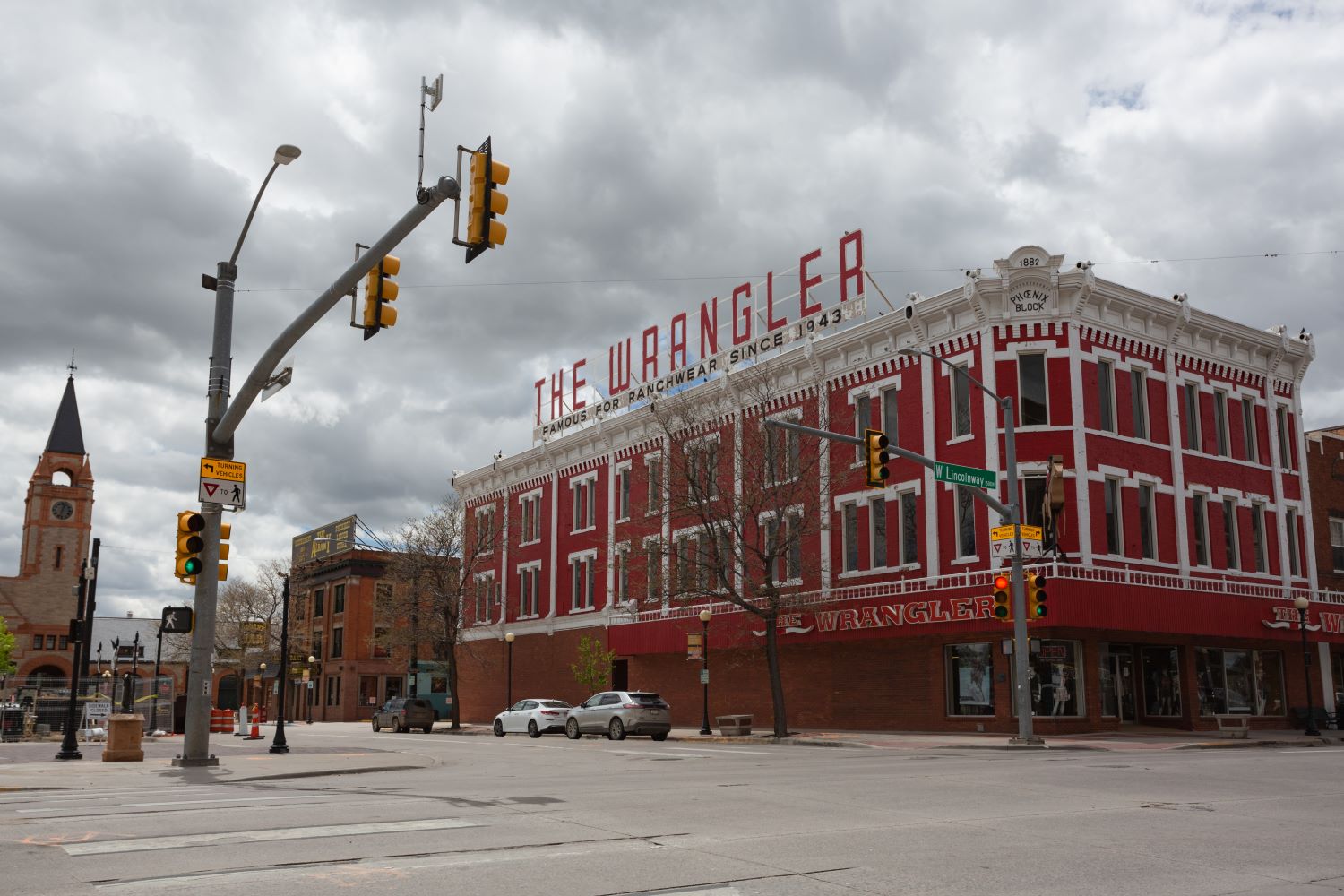
Cheyenne is the capital of Wyoming, and as the capital of the smallest state by population, its modest size of 60,000 people is unsurprising. Cheyenne, despite its small size, is a gritty site worthy of any tour of the Old West.
Cheyenne’s beginnings were in 1867, when the Union Pacific Railroad built its route to the West Coast. It was originally pitched to name the new town Iron City, but instead General Grenville Dodge and other founders decided to name it after the Cheyenne.
It became a quintessential railroad town, its traders supplying goods all along the railroad that stretched ever farther west. It eventually took on the nickname, “The Magic City of the Great Plains.”
Even today, the railroad is a major economic force in Cheyenne with many employed by the Burlington Northern Santa Fe and the Union Pacific. Cheyenne tries to promote its real connection to the Old West through such sites as the Wyoming State Museum, the Cheyenne Depot Museum, and the Cheyenne Frontier Old West Museum.
8. Cody, Wyoming

Cody, Wyoming today is a bustling town of about 10,000 residents with a deep connection with the Old West, starting with its name.
In 1894, the famous William F. “Buffalo Bill” Cody was visiting Sheridan when he reconnoitered the top of the Big Horn Mountains looking west. Seeing its proximity to Yellowstone and its potential to capitalize on the great natural resources of the region, he with other businessmen founded a town in 1896 which was named in his honor.
Cody itself never had the notoriety of a town like Deadwood or Dodge City, but it became a go-to place for people who toured the West, particularly those who sought to see the natural beauty of Yellowstone which is only about an hour’s drive away.
Cody became a welcome place that held a frontier spirit and culture. One event are rodeos, which early on became a centerpiece in Cody’s culture. The Rodeo Stampede has been an integral event at Cody since 1920 and is why Cody claims to be the “rodeo capital of the world.” Between the rodeo and Yellowstone, Cody’s primary economic activity is therefore tourism.
9. Prescott, Arizona

Interestingly, Prescott is the only Old West Town that was named after a historian. In 1864, when a town was first laid out to support the miners swarming into west-central Arizona, there was a question of what it was to be named.
Some suggested naming it Audubon. Others, Aztlan. However, Prescott was adopted at the suggestion of the territorial secretary, Richard McCormick, who admired the historian William H. Prescott, who wrote the History of the Conquest of Mexico.
Prescott was originally the capital of the Arizona Territory until 1867, when it was moved to Tucson and then again from 1877 to 1889, when it was relocated to Phoenix.
The fortunes of the town waxed and waned throughout its development, but at its heart, Prescott was built on an economy of ranching and mining. In some ways, Prescott was more preferable than other locations in Arizona. Its mile-high elevation gives it a pleasant, Mediterranean-like climate.
Today, this Old West city is relatively prosperous, with roughly 130,000 people in the area. Prescott remains in touch with its Old West roots, featuring a popular rodeo which has been held annually since 1888, as well as historical sites such as the Sharlot Hall Museum which holds several restored buildings from the period.
Prescott is also home to the Phippen Museum which specialized in the art of the American West. The list of things to do in Prescott is longer than you might expect for an Old West town of its size.
10. Silverton, Colorado

Even though the Colorado Gold Rush began in 1858, most prospectors eschewed the San Juan Mountains because they were so removed and rugged.
However, in 1860, Charles Baker discovered gold in a valley where the Mineral Creek and Cement Creek joined into the Animas River. Baker built a toll road, expecting a gold rush. However, after initial interest not much gold was found. Also prospectors were attacked by the Ute. This, plus the harsh, raw conditions let settlement die.
However, the situation changed in the 1870s when whites were able to force the Ute to cede rights to the region. Thus, in 1874 Silverton began its life as a mining camp.
Yet even so it was not especially profitable at first, only extracting $15,000 in ore in 1874. Also the costs of removing the ore was high because of its remoteness. This was made easier in 1881 when the railroad finally connected to Silverton.
This led to a long boom. The population increased to 2,000 and between 1882 to 1918, as the mining district extracted $65 million in ore.
The boom slowly ended and while other towns in San Juan county became ghosts, Silverton remained — its only town. Gradually, tourism replaced mining as Silverton’s economic centerpiece supporting today’s 600 residents.
Mining has scarred the region, with some of the mines becoming federal Superfund sites. Nevertheless its natural beauty has attracted tourists to Silverton as well as an opportunity to connect with mining history such as the Old Hundred Gold Mine tour.
11. Amarillo, Texas

Amarillo, Texas is the economic heart of the Texas panhandle. The town was founded in 1897 in response to the building of the Fort Worth and Denver City railway. The land was developed about the Wild Horse Lake, also called the Amarillo Lake.
Thus, the town, which was originally called Oneida, was renamed to Amarillo, a Spanish term that refers to either the yellow wildflowers of the region or the yellow soil of the nearby creek. The first houses were painted yellow in recognition of the name change. The town by 1890 had become a major shipping point for cattle.
Other railroads soon connected to Amarillo and by 1910 the population had grown to nearly 10,000. Subsequent discoveries of helium and oil diversified the economy.
For a tourist of the Old West, visiting a larger city like Amarillo may at first blush seem against the grain, but the city holds several historic attractions which provide a glimpse into its Old West past, like the Amarillo Railroad Museum and the Panhandle Plains Historic Museum.
12. Laramie, Wyoming

Laramie was established as a railroad town upon the high plains by the Union Pacific Railroad in 1868. It quickly grew into a violent frontier settlement. While the town initially boomed, growing to over 3,000 residents, most of the citizenry was transient since (at that time) Laramie was the end of the railroad.
This introduced a troubled element into the town whose initial government ignominiously collapsed due to corruption. Laramie was then taken over by roughnecks and louts.
Three in particular, half brothers who owned a saloon called the “Bucket of Blood,” were extorting settlers to deed their lands to them. As a result, vigilante groups formed to try to bring some semblance of order to Laramie. It worked, but only after four lynchings and lots of injuries.
After the railroad continued its construction to the west the population dropped to about 800. The small town then became a center for ranchers and farmers. It later saw growth as the Union Pacific placed a mill near the town which recycled iron rails. In fact, Laramie became a rail center so it survived after ranching as an industry generally collapsed in the late 1880s.
But what really kept the town going was the establishment of the University of Wyoming in the city in 1887, which employed thousands of citizens. The University is still the town’s largest employer but there is also a tourist industry with several museums including the Laramie Plains Museum.
Sources & Further Reading
- Austin, N. (2020). Arizona Ghost Towns: 50 of the State’s Best Places to Get a Glimpse of the Old West. Arizona Highways Books.
- Paher, S. W., Murbarger, N., & Cirac, P. (2009). Nevada Ghost Towns & Desert Atlas, Vol. 2 Southern Nevada-Death Valley. Nevada Publications.
- Schieffelin, E., & Craig, R. B. (2017). Portrait of a Prospector: Edward Schieffelin’s Own Story. University of Oklahoma Press.
- Speck, G. B. (2020). Ghost Towns. Publications International, Ltd.
- Stansfield, C. A. (2010). Haunted Arizona: Ghosts and Strange Phenomena of the Grand Canyon State. Stackpole Books.
- Varney, P. (2017). Ghost Towns of the West. Quarto Publishing Group USA.
- Varney, P., Drew, J., & Drew, S. (2001). Ghost Towns of Northern California. Voyageur Press.
Joseph A. Williams is an author, historian, and librarian based in Connecticut. He has authored three books: The Sunken Gold, Seventeen Fathoms Deep, and Four Years Before the Mast.


Think about Leadville, Colorado too…… which is also the highest community of its size In altitude.
What about Wichita Kansas as an old west town ? Or Fort Scott Kansas lot’s of history in both of these towns. When I was driving truck’s I visited many old west towns that have a history of the Old West it’s very interesting to visit these towns with western cowboy history.
Telluride, Colorado? Park City, Utah? Butte, Montana? Bodie, California? Wallace, Idaho?
Very nice suggestions, especially Telluride, CO! I might add Lincoln, NM where Billy the Kid made one of his most famous escapes from local jail.
virginia city wyoming was left out… the only original western town not ravaged by a fire…
What about Lincoln New Mexico?